
Manufacturing a single roll of conventional toilet paper requires an astonishing 37 gallons of water. In stark contrast, a single bidet wash uses just an eighth of a gallon. Even so, using fresh water to conserve natural resources can feel counterintuitive at first glance, prompting many conscious homeowners to ask: are bidets better for the environment, or does an electric bathroom fixture simply trade one resource footprint for another?
If you feel skeptical about contradictory statistics online or worry that heated seats and dryers consume excessive energy, you aren't alone. Modern sustainability shouldn't require you to sacrifice personal comfort or guess at the genuine ecological impact of your daily routine.
We're here to clear the confusion with transparent facts. You will discover how making the switch saves thousands of gallons of water, preserves vital forests, and eliminates harmful chemical pollution from your household footprint. Ahead, we break down verified lifecycle resource data to give you complete confidence in choosing modern, water-efficient bathroom fixtures for your home.
Key Takeaways
- Understand the concept of virtual water to see how washing with water uses significantly fewer total resources than manufacturing tree-based paper.
- Review verified lifecycle metrics demonstrating why are bidets better for the environment, contrasting paper production footprints against direct fixture efficiency.
- Discover how curbing household tissue use helps protect old-growth forests and keeps harsh bleaching compounds out of municipal water systems.
- Learn why on-demand water heating systems and intelligent eco-modes prevent electric fixtures from driving up your home energy footprint.
- Gain practical guidance on utilizing micro-aerated spray settings and built-in warm air dryers to cultivate a low-waste bathroom routine.
The Environmental Footprint: Toilet Paper vs. Bidets
Every year, American households consume billions of pounds of toilet paper. This daily habit places relentless pressure on natural ecosystems through timber harvesting, industrial processing, and long-distance transport. When evaluating whether are bidets better for the environment, we have to look past the surface and examine the complete resource chain that delivers a single paper roll to your bathroom.
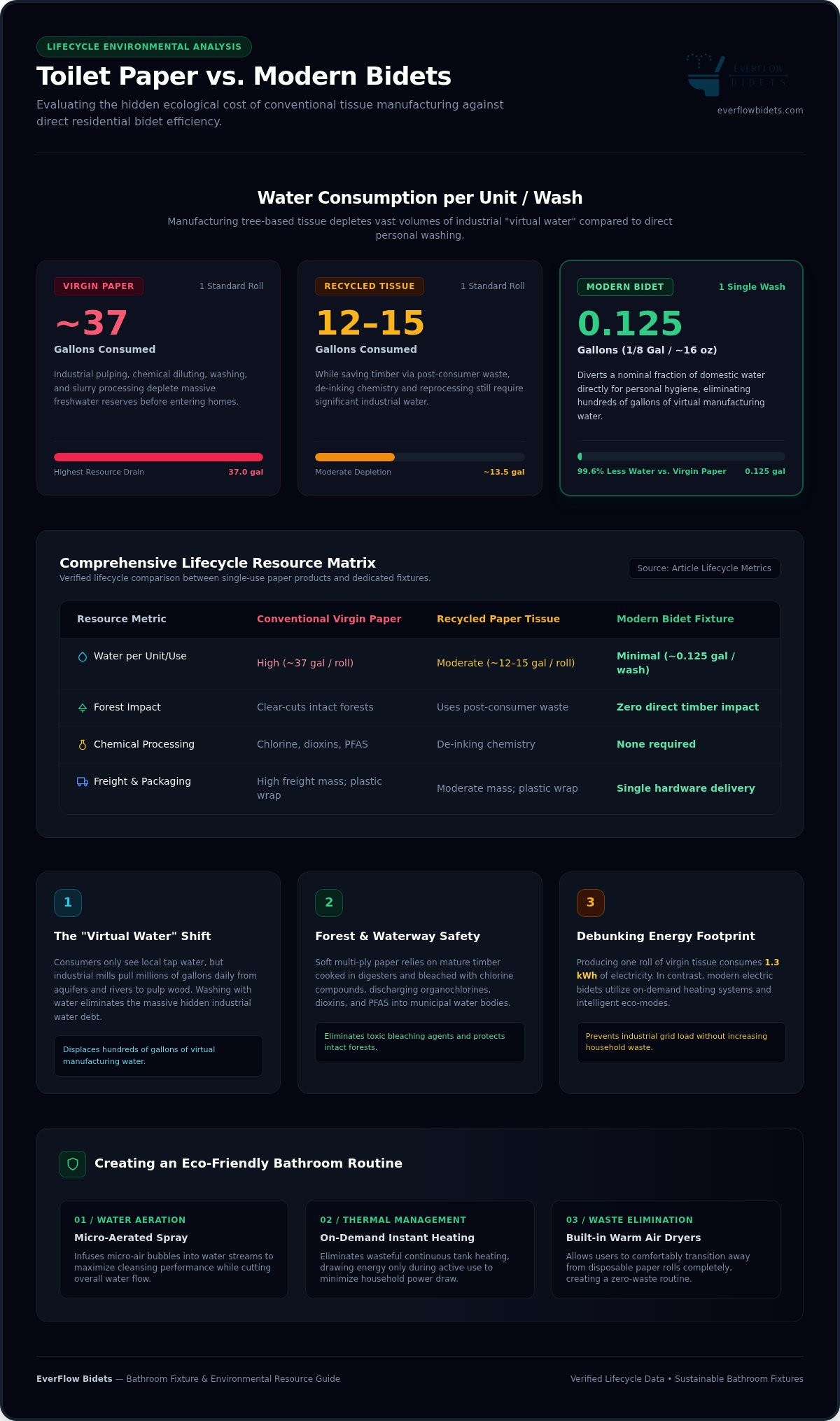
Traditional tissue manufacturing is notoriously resource-heavy. Producing just one roll of standard toilet paper consumes roughly 37 gallons of water, along with 1.3 kilowatt-hours of electricity and significant quantities of chemical bleaching agents. By comparison, using a dedicated fixture like a classic or electronic Bidet requires approximately one-eighth of a gallon of water per wash. Integrating a modern fixture, such as the high-efficiency TOTO G5A bidet toilet, substitutes vast industrial waste with targeted, nominal residential use.
| Resource Metric | Conventional Virgin Paper | Recycled Paper Tissue | Modern Bidet Fixture |
|---|---|---|---|
| Water Consumed per Use | High (~37 gal per roll) | Moderate (~12-15 gal per roll) | Minimal (~0.125 gal per wash) |
| Forest Impact | Clear-cuts intact forests | Uses post-consumer waste | Zero direct timber impact |
| Chemical Processing | Chlorine, dioxins, PFAS | De-inking chemistry | None required |
| Freight & Packaging | High freight mass; plastic wrap | Moderate freight mass; plastic wrap | Single hardware delivery |
The Hidden Lifecycle Cost of Paper Production
Soft, multi-ply tissue comes at a steep ecological price. Mills rely heavily on virgin wood pulp sourced from mature forests, cooking the fibers in chemical digesters and treating them with chlorine bleaching compounds that release persistent organochlorines into local waterways. Beyond manufacturing, paper rolls are bulky and light, creating high fuel emissions per unit as fleets transport them across interstate networks wrapped in single-use plastic packaging.
Water to Make Paper vs. Water to Wash
Industrial mills deplete freshwater reserves long before a roll ever enters a home. Modern bidet nozzles invert this dynamic entirely. Instead of hiding water consumption in distant supply chains, washing directly addresses personal hygiene by using a fraction of that embedded volume. Switching to water cleans far more thoroughly while preventing dozens of gallons of industrial water waste on every single bathroom visit, making it abundantly clear that are bidets better for the environment in daily practice.
Why Bidets Actually Save Water in Practice
At first glance, spraying tap water to save water sounds paradoxical. Homeowners seeing their bathroom utility meters run naturally wonder whether these fixtures truly cut net consumption. Resolving this question requires looking beyond the bathroom wall to understand the difference between visible domestic flow and industrial water depletion.
Every manufactured item carries what hydrologists term a "virtual water footprint." This refers to the total volume of fresh water consumed, evaporated, or polluted throughout an item's production lifecycle. When you evaluate whether are bidets better for the environment, calculating this unseen volume changes the equation completely. An electronic fixture cleans thoroughly using mere ounces of local water, actively displacing hundreds of gallons of virtual water embedded in disposable rolls. If you want to integrate sensible water stewardship into your bathroom, exploring quality bidet toilet seats offers an immediate, practical way to reduce household resource waste.
Understanding the Virtual Water Concept
Consumers notice tap water because it flows directly in front of them, yet industrial papermaking ranks among the most water-intensive manufacturing sectors in the world. Commercial facilities pull millions of gallons daily from rivers and aquifers to wash, pulp, chemically dilute, and slurry wood fibers. In contrast, a bidet simply diverts about sixteen ounces of local municipal water per use and returns it directly to city drainage lines without thick cellulose fibers, synthetic lotions, or chemical binders that complicate wastewater treatment.
Aerated Spray Technology and Efficiency
Modern fixtures do not simply release an unregulated stream of water. Instead, sophisticated precision wands employ micro-aeration technology. By injecting tiny air droplets into the water stream, these nozzles expand individual droplet volume, producing comfortable, firm wash pressure while keeping overall flow exceptionally low.
- Targeted Volume: Micro-aeration cleans effectively with just one pint of water per cycle.
- Customized Pressure: Oscillating and pulsating patterns optimize hygiene without demanding higher gallons-per-minute flow rates.
- Post-Wash Clarity: Wastewater enters household plumbing completely free of pulped solids, reducing drain drag and municipal filtration strain.
You can read more about how modern engineering maximizes comfort in our 2026 bidet guide. Precision fluid dynamics ensure that each cycle maintains luxury-level cleanliness while answering clearly why are bidets better for the environment on a stressed municipal grid.
Forests, Chemical Runoff, and Municipal Pipe Protection
Personal hygiene choices carry consequences far beyond the boundaries of our bathrooms. The standard American reliance on ultra-soft toilet tissue fuels a devastating cycle of commercial timber extraction, industrial chemical pollution, and strained utility infrastructure. Looking past basic water usage makes the answer clear when evaluating whether are bidets better for the environment across entire regional ecosystems.
Old-growth and primary boreal forests serve as irreplaceable global carbon sinks. Clear-cutting these ancient woodlands to manufacture single-use paper flushes centuries of sequestered carbon directly down the drain. Transitioning to modern wash fixtures like integrated bidet toilets stops this destructive demand cycle at its source, allowing homeowners to preserve primary forests through simple daily habits.
Halting the Destruction of Carbon-Rich Boreal Forests
Major paper manufacturers favor virgin softwood fibers from mature northern forests because they yield the plush, absorbent texture consumers expect. Commercial logging strips millions of intact acres annually, disrupting fragile wildlife habitats and releasing vast stores of soil carbon that dwarf simple manufacturing emissions. Switching to water-based cleansing stops treating vital forests as disposable commodities.
Eliminating Toxic Bleaching Agents and Packaging
Achieving pristine white paper requires aggressive industrial bleaching. Even Elemental Chlorine-Free (ECF) processes release persistent organochlorines and chlorinated organic compounds into surrounding rivers, threatening aquatic life and downstream communities. In contrast, pure water washing requires no synthetic binding agents, fragrances, or chemical treatments:
- Zero Chlorine Contamination: Rinse water remains free of caustic bleaching derivatives and carcinogenic dioxin residues.
- Additive-Free Hygiene: Bidets eliminate synthetic dyes, artificial perfumes, and moisture-retaining lotions that routinely enter residential waterways.
- Reduced Packaging Demands: Eliminating plastic-wrapped multi-packs prevents non-recyclable films from entering local landfills.
Relieving Strain on Aging Sewer Infrastructure
Residential plumbing was never engineered to transport endless mounds of dense, multi-ply paper or mislabeled flushable wipes. These fibrous masses combine with cooking oils in city sewers, forming stubborn blockages known as fatbergs that cost municipalities millions to clear. Eliminating solid paper buildup protects home drain pipes, minimizes private septic tank pump-outs, and reduces the massive electrical pumping load required by municipal wastewater plants, proving once again that are bidets better for the environment from local drainlines to broad national waterways.
Energy Use Debunked: Electric Bidets vs. Green Gains
Skeptics often suggest that electric bidets cancel out their water-saving benefits by increasing household power consumption. Adding a heated seat, warm-water heater, and air dryer naturally raises questions about your home electric meter. Yet evaluating whether are bidets better for the environment requires looking at the total energy ledger, comparing small amounts of residential electricity against the staggering thermal and electrical requirements of industrial paper manufacturing.
A standard electric seat draws modest wattage for brief cycles, whereas transforming dense timber into bleached rolls demands continuous industrial power. If you want to explore the latest energy-saving hardware for your home, review premium bidet toilet seats with built-in eco-modes.
On-Demand Heating vs. Traditional Tank Reservoirs
Older electric models maintained a heated water reservoir around the clock, drawing continuous standby power to keep water warm. Modern engineering relies heavily on instantaneous ceramic heating elements instead. These systems heat water on demand only while the wash cycle runs, keeping idle energy draw near zero.
- Instantaneous Warming: Ceramic coils warm water instantaneously, avoiding 24/7 standby tank heating.
- Predictive Timers: Built-in microprocessors detect low-use hours, automatically reducing heated seat temperatures when the household is asleep or away.
- Non-Electric Simplicity: For total off-grid simplicity, non-electric attachments tap directly into ambient household water lines with zero electrical footprint.
Industrial Refining Power vs. Residential Wattage
Paper mills rank among the most energy-intensive manufacturing operations in the world, consuming vast quantities of electricity, natural gas, and coal to run mechanical debarkers, giant chemical digesters, and high-temperature steam drying drums. Producing a single roll demands roughly 1.3 kilowatt-hours of industrial energy.
In stark contrast, an electric seat running modern conservation settings draws nominal wattage for a few minutes each day. The fractional power consumed to warm a stream of water pales in comparison to the fossil-fuel emissions embedded in manufacturing paper rolls. When you weigh the full lifecycle, are bidets better for the environment even when factoring in advanced electrical features. To take an immediate step toward lowering your home resource footprint, shop our curated collection of water-efficient fixtures at everflowbidets.com today.
Creating an Eco-Friendly Bathroom Routine
Adopting sustainable habits shouldn't feel like an uncomfortable compromise. Transitioning away from disposable tissue is remarkably seamless once you understand how to utilize your fixture's features properly. By pairing mindful daily use with efficient hardware, homeowners quickly see how are bidets better for the environment while elevating their personal wellness.
Most households reduce their paper consumption by 75% to 80% immediately after installation, using only a sheet or two to pat dry. Eliminating that final fractional usage simply requires taking advantage of built-in comfort settings or incorporating zero-waste alternatives into your setup.
Eliminating Paper Entirely with Warm Air Dryers
Modern electric seats feature integrated warm air dryers designed to evaporate moisture completely without physical friction. Taking two minutes to relax while the gentle airflow runs eliminates the need for paper squares altogether. For individuals seeking a faster routine without paper waste, keeping a small basket of organic cotton or bamboo drying cloths beside the commode offers a soft, washable pat-dry option. You can explore fully integrated options in our comprehensive guide to luxury bidet toilets.
Selecting Fixtures for Maximum Resource Conservation
The greatest ecological impact comes from treating your commode and wash seat as an integrated water-conservation system. Combining precision cleansing with ultra-low-flow flushing ensures minimal utility consumption across every visit:
- Dual-Flush Technology: Investing in dual-flush units allows you to select a reduced volume for liquid waste, dropping flush rates well below standard federal limits.
- Advanced Hydrophilic Glazes: Leading ceramic finishes create an exceptionally smooth surface that prevents debris from adhering, slashing the need for harsh chemical cleaners.
- Electrolyzed Water Cleaning: Systems utilizing technologies like TOTO ewater+ mist the bowl automatically with sanitized tap water, maintaining spotless hygiene without chemical runoff.
Selecting durable integrated bidet toilets or high-grade retrofit seats turns your daily hygiene routine into an active conservation practice. Quality ceramic and precision internal components provide years of dependable performance, establishing permanent reductions in domestic waste and settling any lingering questions about whether are bidets better for the environment over decades of continuous home ownership.
Transforming Daily Habits into Lasting Conservation
Rethinking personal hygiene creates immediate, tangible benefits for both your household and the planet. When you weigh the massive virtual water footprint and clear-cutting demands of commercial papermaking against an aerated, nominal stream of tap water, the verdict is definitive: are bidets better for the environment in every meaningful category. Modern fixtures replace disposable paper dependence with superior cleanliness, sparing thousands of gallons of industrial water and curbing toxic chemical runoff into shared waterways.
Embracing a sustainable bathroom routine is simple, luxurious, and deeply practical. Advanced models featuring instantaneous ceramic heating and intelligent eco-modes deliver refined comfort without driving up household utility loads. Our curated selection brings together premier manufacturers dedicated to water stewardship and durable engineering, backed by an advisory team ready to help you navigate modern bathroom upgrades.
You have the power to make an enduring ecological difference right from home. Explore energy-efficient bidet solutions at EverFlow Bidets today to elevate your daily wellness while protecting vital natural resources for generations to come.
Frequently Asked Questions
Do bidets use more water than the manufacturing of toilet paper?
No, bidets use significantly less water overall. Producing a single roll of traditional toilet paper consumes roughly 37 gallons of water during the pulping and bleaching stages. A modern bidet wash uses about an eighth of a gallon of aerated tap water. By trading hidden industrial water depletion for minimal home usage, switching to water saves dozens of gallons of freshwater with every use.
Can you completely stop using toilet paper if you install a bidet?
Yes, you can achieve a completely paper-free routine. Most electronic seats and bidet toilets feature built-in warm air dryers that comfortably evaporate remaining moisture within a couple of minutes. Homeowners who prefer a quicker routine without creating paper waste often keep a small basket of reusable, washable bamboo or organic cotton drying cloths next to the commode for gentle patting.
How much electricity does a heated electric bidet seat actually consume?
Electric seats draw very little electricity over the course of a year. Modern units utilize instantaneous ceramic heaters that warm water on demand, rather than drawing continuous power to maintain a hot water tank. Premium models also include smart timers and sleep settings that automatically reduce seat heating during the night, keeping ongoing electrical operating demands remarkably low for the average household.
Are non-electric bidet attachments better for the environment than smart seats?
Non-electric attachments have a zero-watt electrical draw, but smart seats offer ecological advantages of their own. Electronic models feature integrated air dryers that help eliminate drying paper entirely, whereas non-electric models still require paper or cloths for drying. While mechanical sprayers avoid household wattage, smart models offset their modest power use by maximizing paper reduction, proving why are bidets better for the environment across multiple configurations.
Is using a bidet environmentally responsible during regional drought conditions?
Yes, using a bidet remains environmentally sound even in dry climates. While local water supplies must be managed carefully, the global water footprint of industrial paper mills pulls water from strained watersheds across the continent. Because washing consumes merely sixteen ounces of local tap water while displacing dozens of gallons of industrial manufacturing water per roll, using a bidet yields a net water savings.
What happens to the waste and water after you finish using a bidet?
The rinse water drains straight into your existing municipal sewer line or residential septic system, exactly like standard toilet flush water. Unlike heavy toilet paper that clumps and strains filtration equipment, liquid bidet runoff carries no solid binding agents or bleached wood fibers. This clean rinse water flows easily through domestic pipes, reducing blockages and simplifying processing at local wastewater plants.
Are bamboo toilet paper rolls greener than installing a home bidet?
Bamboo is more renewable than old-growth timber, but bidets remain the superior environmental choice. Manufacturing bamboo rolls still demands heavy volumes of processing water, industrial transportation energy, and chemical pulping agents to create soft fibers. Investing in a permanent wash fixture eliminates recurring manufacturing and shipping footprints altogether, reinforcing why are bidets better for the environment over years of daily household use.
Disclaimer
The information provided in the EverFlowBidets blog is for general informational and educational purposes only. While we strive to publish accurate, current, and well-researched content, nothing on this website should be considered medical advice, diagnosis, or treatment. Articles discussing the potential health, hygiene, accessibility, or environmental benefits of bidet use are based on publicly available research, manufacturer information, and other reputable sources. Individual results may vary, and any health-related decisions should be made in consultation with a qualified healthcare professional.