

What if the most helpful bidet is the one that asks you to do less, not the one with the most features? For seniors, personal hygiene can become harder when wiping is uncomfortable or reaching and twisting are difficult. Finding the best bidet for seniors independence means focusing on what makes daily use manageable: controls the user can understand, a comfortable seating experience, and a format that fits the bathroom.
Choosing can feel complicated because a bidet seat, an integrated bidet toilet, and a bidet toilet combination differ in fit and in how much of the bathroom may need to change. A long list of settings is no advantage if the controls are difficult to use.
This guide compares bidet formats and practical features, including controls, toilet fit, seating, and everyday operation. Use it to identify what matters most to the intended user and narrow the options before you buy. The goal is a confident, comfortable choice that supports greater independence without relying on unsupported medical promises.
Key Takeaways
- Choosing the best bidet for seniors independence starts with the intended user’s priorities, abilities, and preferred hygiene routine.
- Compare bidet seats and integrated toilets based on how each fits the existing bathroom and the scale of the change involved.
- Look for controls the user can read, understand, reach, and operate comfortably. More settings aren’t automatically more helpful.
- Check toilet shape, measurements, available space, and product compatibility before settling on a format.
- Consider seating preferences, including whether a bidet seat with a sittable lid suits the user’s needs.
How a Bidet Can Support a Senior's Independence with Daily Hygiene
Independence in personal care means different things to different people. One person may want to avoid reaching or twisting; another may simply prefer a different way to clean. A bidet uses water for personal cleansing. It can be part of a bidet toilet or toilet combination, or added as a bidet seat to a compatible existing toilet. The right format depends on the bathroom setup and what feels comfortable and manageable to the person using it.
A bidet doesn’t have to transform the whole routine to be useful. For some people, water-based cleansing may reduce how much wiping they need to do. That could make personal care feel easier or more comfortable, but the experience varies. A bidet is a hygiene product, not a medical treatment, and it can’t replace advice from a healthcare professional about an individual concern.
Which parts of the bathroom routine may feel challenging?
Everyday tasks can become less convenient for many reasons, without indicating a particular diagnosis or ability level. Reaching or twisting may feel awkward; balance, hand dexterity, or vision may affect how someone uses a control. Familiarity matters, too. A layout that seems intuitive to one person may feel confusing to another. Start by asking the intended user which part of their own routine they’d most like to make simpler.
What can a bidet change about personal care?
Many electronic bidets use controls for functions such as water temperature or nozzle position, though features vary by model. A short overview of electronic bidet features can help explain the technology, but the user experience depends on the specific product and its controls. The practical question is whether the functions the user wants are easy to find and operate.
A bidet can support a personal-care routine by using water for cleansing, potentially reducing reliance on wiping and helping the user manage that step with greater comfort and self-direction. This is a possibility, not a guaranteed result. Some people may value a simple wash function; others may prefer their current routine or need support with other bathroom tasks. The best bidet for seniors independence isn’t necessarily the model with the most functions. It’s the option that matches the user’s priorities, feels understandable in daily use, and suits the bathroom.
For an initial comparison, consider whether a bidet seat that attaches to an existing toilet or a complete bidet toilet better matches the home’s setup. In either case, let the user’s comfort guide the decision. Give them time to review the controls and consider how the feature would fit their routine before choosing.
Which Bidet Features Can Make Everyday Use Easier?
A feature is useful only if the person who needs it can operate it comfortably. Before comparing products, consider the intended user’s vision, dexterity, reach, and familiarity with electronic controls. The goal isn’t to choose the bidet with the longest feature list. Identify functions that fit the user’s routine and feel straightforward to use.
How should seniors evaluate bidet controls?
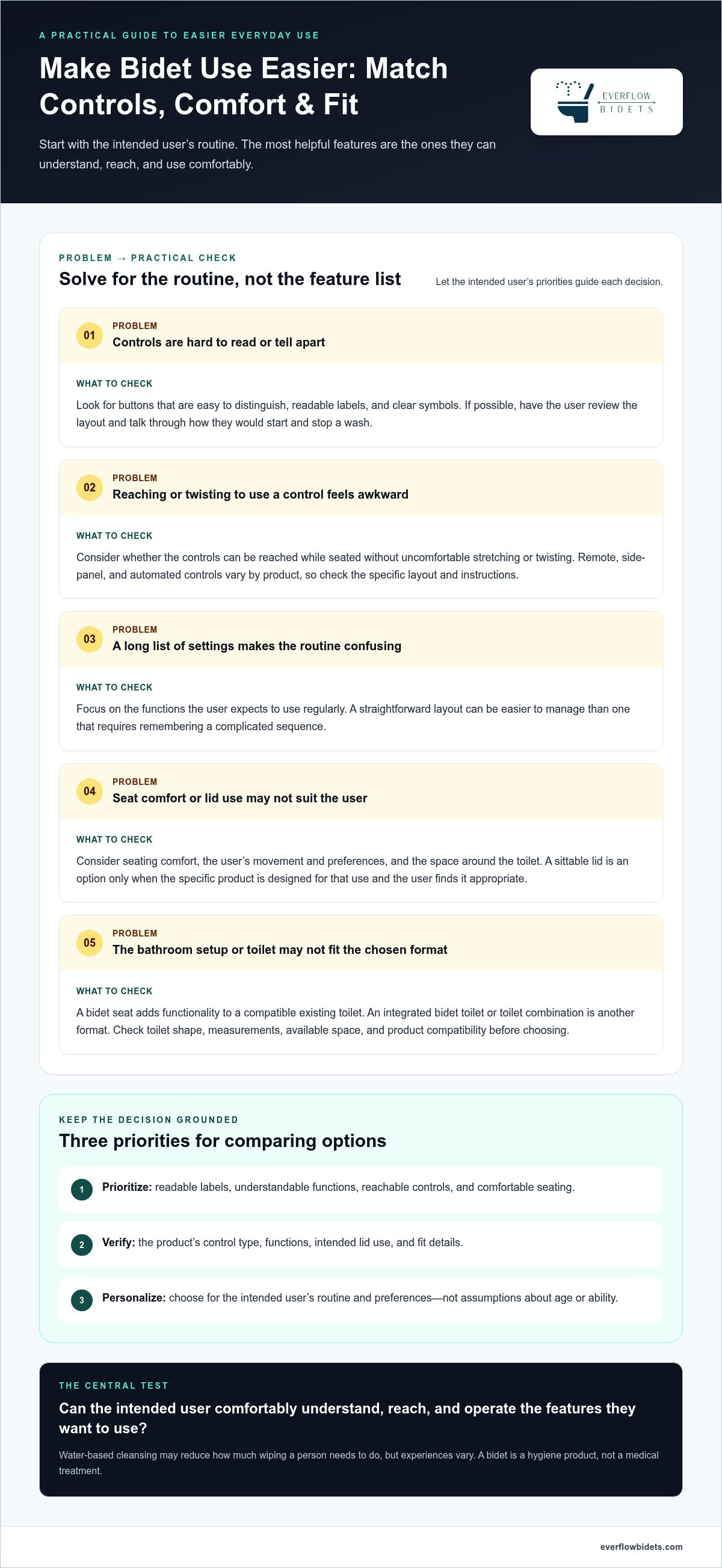
Look closely at how controls are presented and reached. Are the buttons easy to distinguish? Are the labels readable and the symbols clear? Can the user reach the controls while seated without uncomfortable stretching or twisting? If possible, let the intended user review the control layout and talk through how they’d start and stop a wash. Their experience is more useful than a feature list alone.
Electronic bidets may use a remote, a side panel, or automated functions, but these options vary by product. Check the specific product details and instructions to understand its controls and operation. A simple layout with clearly understood functions may be easier to manage than a panel packed with options. Consider whether the user can find the functions they expect to use regularly without having to remember a complicated sequence.
Do comfort and usability features matter more than extras?
They matter when they address a daily need. Seat comfort, the lid, and the space around the toilet can all affect sitting down, standing up, and using the bidet. Consider the user’s movement and preferences rather than assuming one seat shape or lid design will suit everyone. A sittable lid, for example, is worth considering only if the specific product is designed for that use and the user finds it appropriate.
Separate practical priorities from optional conveniences. The user may care most about an easy-to-reach control, while someone else may value a particular wash or drying function. Automated operation can be convenient for some users, but it should suit the user’s preferences and the way the product works.
- Prioritize: readable labels, understandable functions, reachable controls, and a comfortable seating experience.
- Verify: the product’s control type, functions, and intended lid use in its product information.
- Personalize: choose according to the intended user’s routine, not assumptions about age or ability.
Ease of use should lead the feature decision: choose functions the intended user can comfortably understand and operate. Once those priorities are clear, explore bidet toilet seats as one format to compare with the bathroom setup.
Bidet Seat, Integrated Toilet, or Sittable-Lid Option: What Fits Best?
The right format depends on whether you’re adapting a toilet that’s already in place or planning a larger bathroom change. A bidet seat is designed to add bidet functionality to a compatible toilet. An integrated bidet toilet combines the toilet and bidet features in one unit, making it an option to consider when replacing a fixture or planning a broader upgrade. Neither format is automatically better. Start with the bathroom’s setup and the intended user’s preferences.
When might a bidet seat be the practical starting point?
A bidet seat may suit a household that wants to add bidet features while keeping the existing toilet. This can involve changing less of the bathroom than replacing the whole fixture, but compatibility isn’t universal. Toilet shape and dimensions, available space, and the existing setup all matter. Compare the product’s compatibility guidance with the toilet before choosing. Browse the bidet toilet seat collection to see this format.
Consider the intended user’s needs alongside the physical fit. Keeping a familiar toilet may be a priority for one person, while another household may already be planning a full bathroom update. The seat still needs to suit the user, including their comfort getting seated and operating the bidet features.
When should shoppers compare a bidet toilet or lift option?
An integrated bidet toilet is worth comparing when the project involves replacing the toilet or changing more of the bathroom. Because it’s a complete fixture rather than an addition to the existing toilet, account for the room’s layout and the product’s dimensions. Review the specific product guidance instead of assuming it will fit the current space or plumbing arrangement.
A bidet toilet lift is a distinct option from both a conventional bidet seat and an integrated toilet. Review its purpose, dimensions, and compatibility in the product information, then compare those details with the user’s needs and toilet setup. See the bidet toilet lift product as a separate category to consider.
Lid preferences can also shape the decision. A sittable lid may matter to someone who wants that particular use, but a category name alone doesn’t explain how a specific lid is designed or what it supports. Check the product details and compare bidet seats with sittable lids as part of the selection process.
The best bidet for seniors independence is the format that suits the bathroom and feels manageable to the person using it. Compare the scale of the change, verify fit, and weigh product specifications against the user’s preferences before deciding.
How to Choose a Bidet for a Senior: A Practical Fit Checklist
The best bidet for seniors independence is the one that fits the user’s routine and bathroom, not simply the one with the most features. Use this checklist to compare options with the intended user involved at every step.
- Start with the user’s priorities. Ask which part of personal care they’d like to make easier and what they want their routine to feel like. Include the user in the decision rather than choosing only on their behalf. Note any concerns about reaching, balance, dexterity, vision, or learning new controls without assuming what they can or can’t do.
- Separate must-haves from extras. Identify what would make everyday use manageable, such as controls the user can understand or seating that feels comfortable. List optional conveniences separately. This keeps the comparison focused on the user’s priorities instead of a long catalogue of features.
- Choose a format to compare. Consider whether a bidet seat on the existing toilet or a complete bidet toilet better suits the household’s plans. A seat may involve changing less of the bathroom, while an integrated toilet may fit a broader replacement or upgrade project. The right direction depends on the existing setup and the user’s preferences.
- Check the physical fit. Measure the toilet and available space, including the area the user needs to sit, stand, and reach the controls comfortably. Compare those measurements with the product’s dimensions, toilet-shape guidance, and compatibility information. Don’t assume a seat or toilet will fit without checking.
- Review setup requirements and get advice when needed. Electrical and installation details vary by product, so use its documentation rather than applying a general rule. If a medical or mobility question affects the decision, discuss it with an appropriate healthcare professional.
Check bathroom fit and practical setup
Fit involves more than whether a product can be placed over or in the toilet area. Consider the user’s movement, preferred controls, and the bathroom changes they’re comfortable with. If an integrated option suits the project, review the bidet toilets collection and compare product dimensions and specifications with the measured space.
As a final check, walk through the intended routine together. Can the user reach and understand the controls? Does the seating feel appropriate? Does the format suit the bathroom without changes they don’t want? Explore bidet options for your bathroom once those priorities and measurements are clear.
Find a Bidet That Supports Independence Without Overcomplicating the Routine
A good choice doesn’t have to be the most elaborate one. The best bidet for seniors independence is the option that fits the user’s bathroom, supports their preferred routine, and feels comfortable to use consistently. A bidet seat may adapt an existing toilet, while an integrated toilet is more suited to a replacement or broader bathroom update. Seating preferences, including whether a sittable lid matters, are personal and should be checked against the specific product’s details.
A quick decision framework for families and older adults
Use the intended user’s priorities as your starting point. Compare formats based on what each involves, rather than assuming one is right for everyone:
- Bidet seat: May suit someone who wants to adapt an existing toilet. Fit depends on the toilet and product compatibility.
- Integrated bidet toilet: May suit a bathroom replacement or larger upgrade. Compare the complete fixture’s dimensions and setup with the available space.
- Sittable-lid option: May be worth investigating if the lid’s intended use matters to the user. Confirm the specific product’s design and specifications.
For each option, weigh the scale of bathroom changes against the user’s comfort with the controls and routine. Individual preferences should guide the final decision, not age-based assumptions or a longer list of features.
What to do before choosing a product
Write down the user’s must-haves, preferred routine, and any concerns about seating or controls. Measure the toilet and available space, then compare those details with the product’s specifications and compatibility guidance. Review setup requirements for the specific model rather than assuming electrical or installation details apply to every bidet.
For another perspective focused on senior-friendly options, read the Best Bidets for Seniors guide alongside this framework. Use it as a companion resource, then return to the user’s needs and the bathroom’s measurements when narrowing the choice.
Compare relevant formats and verify the details that matter to the intended user. To browse options across bidet seats, bidet toilets, and bidet combinations, explore EverFlow Bidets at your own pace.
Choose a Bidet That Fits the User’s Everyday Routine
The best bidet for seniors independence isn’t defined by the number of features. It’s the option the intended user can operate comfortably, that suits their preferences, and that fits the bathroom setup. A bidet seat may adapt an existing toilet, while an integrated bidet toilet may make more sense as part of a broader replacement. In either case, review product dimensions and compatibility details before deciding.
Keep the user’s priorities at the center of the choice. Simple controls, comfortable seating, and the scale of bathroom changes can matter more than optional extras. For specific seating preferences, review product information for bidet toilet lifts and seats with sittable lids rather than assuming a feature or fit from the category name alone.
EverFlow Bidets offers bidet toilet seats, bidet toilet combinations, and bidet toilets, giving households formats to compare against their needs and plans. Explore bidet options for a more manageable daily routine and take the next step at a pace that feels right. A thoughtful choice can help make personal care feel more comfortable and self-directed.
Frequently Asked Questions
Can a bidet help seniors stay independent?
It may help some older adults manage parts of personal hygiene with greater comfort and self-direction. Water-based cleansing can reduce reliance on wiping for some users, but a bidet won’t address every bathroom task or suit every person. The best bidet for seniors independence depends on individual priorities, comfort, control usability, and bathroom fit. Include the intended user in the decision and consider whether the product’s operation feels manageable for their everyday routine.
What type of bidet is easiest for seniors to use?
The easiest type is the one the intended user can operate comfortably and that suits the bathroom. A bidet seat may add bidet functionality to a compatible existing toilet, while an integrated bidet toilet may suit a replacement project. Compare each option’s controls, seating, dimensions, and product instructions. Check the product information to see whether it has the control style or functions the user prefers.
Are bidet toilet seats a good option for older adults?
Bidet toilet seats can be a good option if the user prefers to adapt an existing toilet rather than replace the whole fixture. Compatibility matters: toilet shape, measurements, available space, and the specific seat’s requirements all affect whether it’s a suitable match. Also consider how the user will reach and understand the controls. Review product specifications before choosing, and compare a seat with an integrated bidet toilet if a bathroom replacement is already planned.
Can a bidet replace help from a caregiver?
A bidet may reduce the need for assistance with some personal-cleaning steps, but it can’t be expected to replace caregiver support. Needs differ, and a person may still want or require help with other parts of using the bathroom, operating controls, or moving safely. Let the user guide the discussion about privacy and assistance. If care needs or mobility concerns affect the decision, consult an appropriate healthcare professional for individualized guidance.
What should I look for in a bidet for a senior?
Start with the user’s preferred routine and the part of personal care they’d like to make more manageable. Look for controls with labels and functions they can understand, and consider their vision, dexterity, reach, and seating preferences. Then compare bidet formats and check the toilet’s shape and measurements against product compatibility guidance. Separate must-have qualities from optional features so the choice supports everyday use rather than adding unnecessary complexity.
Is a bidet difficult to install for an older adult?
Installation requirements vary by product and bathroom setup, so there isn’t one answer for every bidet. A bidet seat is designed to work with a compatible toilet, while an integrated bidet toilet involves replacing the toilet fixture. Review the product’s installation instructions, compatibility details, and any electrical or setup requirements before deciding. Don’t assume installation will be straightforward for a particular user or home based on the product category alone.
Do bidets provide medical benefits for seniors?
Bidets are personal hygiene products, not medical treatments, and specific medical benefits shouldn’t be assumed. Some users may find water-based cleansing more comfortable or convenient than relying on wiping, but results and preferences vary. A bidet doesn’t replace diagnosis, treatment, or clinical advice. If the user has a health concern or needs guidance about whether a bidet is appropriate for their circumstances, they should speak with a healthcare professional.
Disclaimer
The information provided in the EverFlowBidets blog is for general informational and educational purposes only. While we strive to publish accurate, current, and well-researched content, nothing on this website should be considered medical advice, diagnosis, or treatment. Articles discussing the potential health, hygiene, accessibility, or environmental benefits of bidet use are based on publicly available research, manufacturer information, and other reputable sources. Individual results may vary, and any health-related decisions should be made in consultation with a qualified healthcare professional.