
The greenest bathroom routine isn’t always the one with the boldest sustainability label. If you’re researching eco friendly toilet paper alternatives 2026, conflicting claims about bamboo, recycled paper, and water use can make the practical choice feel anything but clear. And a lower-waste option only works if it fits your household’s habits and bathroom setup.
You don’t have to choose between unfamiliar routines and sticking with conventional toilet paper. The right option depends on more than the material: it also involves sourcing, disposal, upkeep, and how much paper your household uses. A bidet, for example, can reduce reliance on paper, but it has different considerations from a disposable paper alternative.
This guide compares bidets, recycled and bamboo toilet paper, and reusable cloth wipes, including the trade-offs that sustainability labels may not explain. You’ll learn what to consider about water, maintenance, comfort, and bathroom compatibility, then use those factors to choose an approach that feels realistic for your home, whether that means switching products or combining options.
Key Takeaways
- Learn why a product’s material alone can’t determine its overall environmental impact, and what evidence to look for.
- Compare recycled paper, bamboo paper, bidets, and reusable cloths to see which routines may suit your household.
- Use this guide to evaluate eco friendly toilet paper alternatives 2026. Consider paper reduction, water use, and disposal without relying on blanket sustainability claims.
- Choose one change to try first, then assess comfort, upkeep, and whether everyone at home will use it.
- Understand how bidet seats, bidet toilets, and toilet-bidet combinations differ when considering a paper-reduction strategy.
What Makes a Toilet Paper Alternative More Eco-Friendly?
A toilet paper alternative is any product or routine that changes the material used or reduces how much conventional toilet paper a household relies on. Recycled and bamboo paper change the material; a bidet may reduce paper use; reusable cloths replace some disposable products. These options work differently, so “eco-friendly” isn’t a single attribute they can all share.
Material alone doesn’t reveal a product’s full environmental impact. Sourcing and processing matter, as do packaging and transportation. For reusable or water-based options, water use and end-of-life disposal also belong in the comparison. A product made from a renewable material may still involve processing and shipping impacts, while a routine that uses less paper introduces other considerations. For background on bidet types and use, see this overview of the Bidet.
Claims about alternatives are most useful when they explain what was assessed and how. Look for details you can verify, not just broad promises or a “green” label. Even a well-supported claim may describe one part of a product’s impact rather than its entire life cycle. This is the practical question behind searches for eco friendly toilet paper alternatives 2026.
Which factors matter when assessing sustainability claims?
Check whether a claim names the product’s materials, explains where they come from, and identifies the stage or impact being discussed. If a certification is mentioned, confirm that it applies to the specific product and review what it covers. Don’t assume a material label proves lower overall impact. Without comparable life-cycle evidence, declaring one option a universal winner goes beyond what the claim establishes.
- Materials and sourcing: Are the contents and source described clearly?
- Processing and packaging: Does the information explain how the product is made and packed?
- Transport, water, and disposal: Are these factors addressed where relevant?
Why does household context change the answer?
A choice that suits one home may feel inconvenient in another. Consider how many people share the bathroom, whether its layout and existing plumbing suit the change, and whether everyone is comfortable adjusting their routine. Homes with septic systems should check relevant system guidance before changing disposal habits. A bidet may reduce paper use without eliminating paper for drying or other bathroom needs.
Start with a change your household can maintain. For a bidet, check the product’s compatibility with your toilet and bathroom setup. EverFlow Bidets offers bidet toilets as one option to compare with your current fixture; review the standalone bidet toilet option and its product details before deciding. The practical goal is a routine that fits your home, not a perfect score based on one material claim.
Four Eco-Friendly Toilet Paper Alternatives to Consider in 2026
These four options change different parts of the bathroom routine. Recycled and bamboo toilet paper remain disposable paper products, while bidets and reusable cloths may reduce reliance on them. Comparing eco friendly toilet paper alternatives 2026 means weighing product details and household routines, not assuming one material is automatically best. For context on conventional paper production, see Mongabay’s overview of the environmental impact of toilet paper.
Recycled toilet paper
Made with recovered paper fibers, recycled toilet paper may suit households that want to keep a familiar disposable routine while choosing a different fiber source. Check the product’s stated fiber content, sourcing details, packaging, and any certification claims. Texture and softness vary by product. Recycled paper still involves processing, packaging, transportation, and disposal, so the material alone doesn’t establish its overall impact.
Bamboo toilet paper
Bamboo paper uses plant fibers and offers a paper-based option for people who prefer not to change their routine. But “bamboo” alone doesn’t explain how a product was sourced or processed. Compare the manufacturer’s sourcing information, packaging, softness, and product-specific certifications with those of recycled options. Look for clear, verifiable claims rather than assuming every bamboo product has the same environmental profile.
Bidets
A bidet uses water to rinse and may reduce how much toilet paper a person uses, though it may not eliminate paper from the bathroom. A bidet seat adds a bidet function to a compatible toilet; a bidet toilet integrates the functions in one fixture. EverFlow sells bidet seats and bidet toilets. If you’re considering this approach, compare product requirements with your bathroom setup and weigh water use alongside potential paper reduction.
Reusable cloths
Reusable cloths are a personal choice for households comfortable with using, storing, and laundering them. They may replace some disposable paper, but require a consistent cleaning routine and a way to keep used cloths separate until washing. Preferences around handling and hygiene vary, so this option won’t suit everyone. It also doesn’t mean every paper product can or should be removed from the bathroom. If you are exploring sustainable habits across other personal care routines, check out FemiEko for educational resources and reusable intimate care options.
How do recycled and bamboo toilet paper compare?
Both are disposable paper options, and neither has a guaranteed advantage based on its material name alone. Compare actual fiber and sourcing disclosures, packaging, softness, and any certification listed for the specific product. If those details aren’t available, treat broad environmental language cautiously.
Can a bidet or reusable cloth reduce paper use?
Both may reduce paper use, but they involve different routines: a bidet uses water, while reusable cloths require collection and laundering. Start with the option that seems manageable for your household, and assess comfort and upkeep before making a broader change.
How Do These Toilet Paper Alternatives Compare Environmentally?
A useful comparison looks beyond the name of a material. Recycled and bamboo toilet paper remain disposable products, while a bidet or reusable cloth may change how much paper a household uses. Product-specific information matters: general assumptions about a fiber or routine can’t establish the full impact of a particular product.
| Option | Materials | Likely paper reduction | Water considerations | Disposal |
|---|---|---|---|---|
| Recycled toilet paper | Recovered paper fibers; confirm the product’s stated content and sourcing. | Usually no change unless the household uses less paper. | Manufacturing may involve water; product-specific figures may not be available. | Disposable paper; follow product directions and household plumbing guidance. |
| Bamboo toilet paper | Bamboo plant fibers; sourcing and processing vary by product. | Usually no change unless the household uses less paper. | Growing and manufacturing impacts depend on the product and available evidence. | Disposable paper; follow product directions and household plumbing guidance. |
| Bidet | Uses water for rinsing; equipment and operation vary. | May reduce paper use, but may not eliminate it. | Uses water; don’t assume a net environmental benefit without comparable evidence. | Equipment remains in use; consider product guidance and household plumbing. |
| Reusable cloth | Reusable fabric; material and care vary. | May replace some disposable paper. | Laundering uses water; actual use depends on household care routines. | Reusable cloths require laundering and a household plan for storage and cleaning. |
What should you compare across materials and products?
Look for clearly documented recycled content, bamboo sourcing, and packaging details. Check that any certification applies to the specific product and understand what it verifies. Processing and transport can also matter, but compare them only when reliable product-level information is available. If a manufacturer doesn’t provide evidence, mark that detail as unknown rather than filling the gap with assumptions. A “natural” or “recycled” label by itself isn’t a full environmental assessment.
How do water use and disposal affect the comparison?
Bidets add water use while potentially reducing paper consumption; the balance depends on the product and household routine. Reusable cloth shifts some of the routine to laundering. Plumbing and wastewater considerations can also vary by product and home, including homes connected to sewer systems or using septic systems. Follow product instructions, and ask a qualified plumbing professional about questions specific to your setup.
No option is automatically best for every household; the soundest choice depends on product evidence, how it’s used, and what the home can support. That’s the practical lens for weighing eco friendly toilet paper alternatives 2026.
How to Choose and Adopt a Toilet Paper Alternative
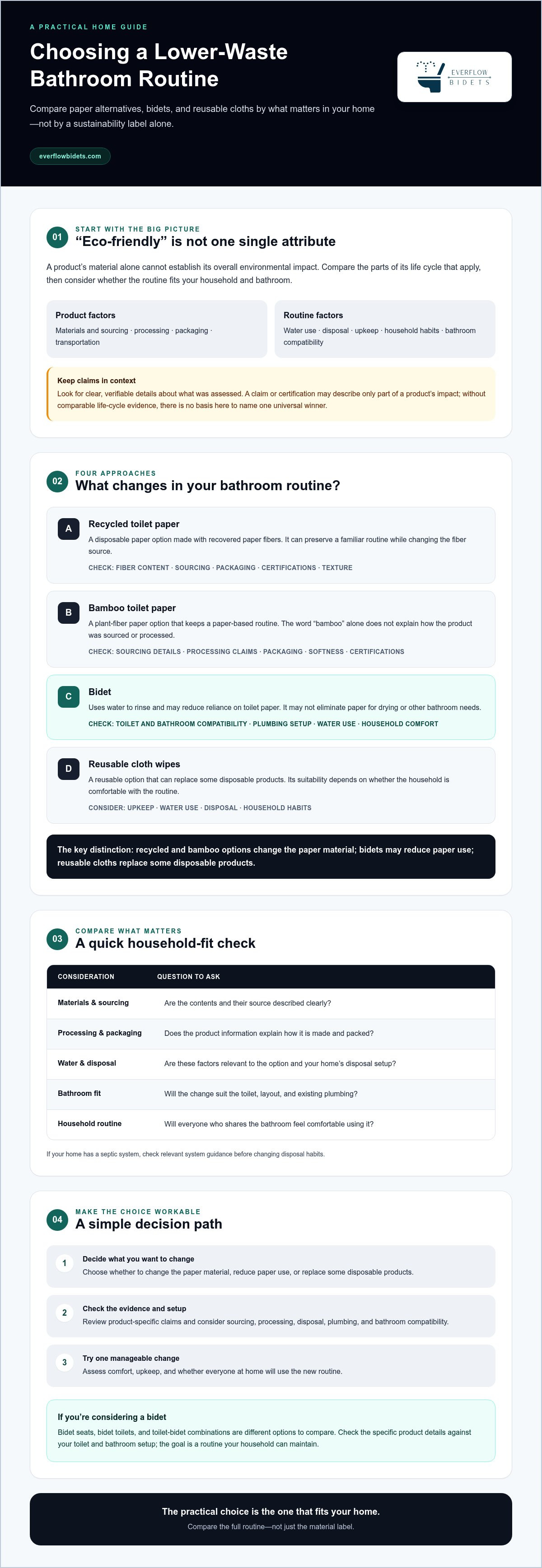
The best choice is one your household can use comfortably and maintain. Rather than replacing every bathroom product at once, work through a few practical questions, then test one change before deciding whether it belongs in your routine.
Start here: What matters most to your household, what will your bathroom support, and what evidence does the product provide?
- Set your priority. Decide whether you want to change paper materials, use less paper, or try a reusable routine. A clear goal helps narrow the options without assuming one approach is right for everyone.
- Match the option to your habits. Recycled or bamboo paper may suit households that prefer a familiar disposable routine. A bidet may fit if you’re open to a water-based rinse and a bathroom upgrade. Consider reusable cloths only if everyone involved is comfortable with their storage, handling, and laundering.
- Check the bathroom and household setup. For a bidet, confirm that the product is suitable for your toilet and available bathroom connections. If you have a septic system or questions about plumbing, wastewater, or disposal, consult the product guidance and ask a qualified professional about your home.
- Review the product evidence. Read labels and sourcing statements for paper products, and check the care, cleaning, and disposal instructions for any option. Treat broad environmental language as a prompt to look for specifics, not as proof of overall impact.
- Try one change at a time. Start with one product or one bathroom, if practical. Give household members a chance to assess comfort and convenience before making a wider change.
How can you make a gradual, informed switch?
Keep the rest of the routine steady during a small trial. Note whether the new option is easy to use, how much upkeep it requires, and whether household members accept it. If you’re testing paper, pay attention to how it performs for your needs and whether its packaging or sourcing information is clear. With a bidet or reusable cloth, follow the supplied instructions rather than guessing about care or setup.
Track paper use if reducing it is a goal, but don’t assume a particular result. Actual changes depend on how the household uses the alternative, and keeping some toilet paper may still make sense. For readers considering a bidet, explore bidet options as one possible part of a broader plan. A measured trial can help you choose among eco friendly toilet paper alternatives 2026 based on real household experience, not just product claims.
Can a Bidet Be a Practical Toilet Paper Alternative?
A bidet can be one way to reduce routine toilet paper use, but it isn’t a zero-impact solution or the right fit for every bathroom. It uses water to rinse, and some people may still choose paper for drying. Its environmental trade-offs depend on factors such as product use and household setup, so it’s best considered as one option among the alternatives rather than a guaranteed improvement.
What are the practical benefits and trade-offs of using a bidet?
The rinse function changes part of the usual cleanup routine and may help a household use less paper. In return, you’ll need to consider water use, bathroom compatibility, and whether household members are comfortable learning a different routine. Check the product’s requirements and instructions before choosing. If you’re considering a bidet for a health-related concern, ask a qualified healthcare professional for advice rather than relying on general product claims.
Paper reduction doesn’t mean paper elimination. Some users may continue to keep toilet paper on hand, and a bidet still has its own resource and maintenance considerations. Compare those practical details with your household’s priorities before deciding whether the change makes sense.
Which bidet category could fit your bathroom?
A bidet toilet seat adds a bidet function to a compatible toilet, so the first step is checking whether the seat and existing toilet are a suitable match. Browse bidet toilet seat options to compare seat-based products.
A bidet toilet is a toilet with an integrated bidet function, making it a different kind of bathroom upgrade. A bidet toilet combination also brings toilet and bidet functions together; product terminology can overlap, so read each listing carefully to understand what fixture is included. EverFlow sells bidet toilet seats and bidet toilets, but product selection is separate from installation. For a complete-fixture approach, review the bidet toilet collection and confirm product compatibility and requirements for your bathroom.
As you evaluate eco friendly toilet paper alternatives 2026, consider the routine you want, available bathroom space, and product guidance, not just the possibility of using less paper. If a bidet seems worth exploring, you can compare available bidet options at your own pace.
Choose a Lower-Waste Routine That Works for Your Home
The most practical choice isn’t defined by a material label alone. Recycled or bamboo paper can preserve familiar habits, while bidets and reusable cloths offer different ways to reduce paper use, each with its own care, water, and household considerations. Compare product-specific evidence, then choose an option your household can comfortably maintain.
For eco friendly toilet paper alternatives 2026, a gradual change can be more useful than trying to replace every bathroom product at once. Start with one priority, check compatibility and instructions, and pay attention to how the new routine works in practice. If you are also reviewing your household's personal hygiene supplies while making these changes, check out Eve llc for everyday feminine care products.
If a bidet is one option you’re considering, EverFlow offers bidet seats, bidet-toilet combinations, and standalone bidet toilets, along with educational resources to help shoppers make informed choices. Explore bidet options for reducing routine paper use, and take the next step at a pace that feels right for your home.
Frequently Asked Questions
Is bamboo toilet paper more eco-friendly than regular toilet paper?
Not automatically. Bamboo is a plant fiber, but its environmental impact depends on sourcing, processing, packaging, and transport. Compare product-specific information rather than assuming every bamboo product is preferable to conventional paper. Recycled toilet paper is another option, and its claims also need checking. Look for clear material and sourcing details, plus any certification that applies to the specific product. Without comparable evidence, it’s not possible to name a universal winner.
What is the most eco-friendly alternative to toilet paper?
There isn’t one option that’s best for every household or environmental measure. Recycled or bamboo paper may preserve a familiar routine, while a bidet or reusable cloth may reduce disposable paper use but introduces other considerations, such as water use or laundering. The most suitable choice depends on product evidence, household habits, bathroom setup, and disposal practices. Compare the trade-offs before choosing among eco friendly toilet paper alternatives 2026.
Can a bidet completely replace toilet paper?
A bidet may reduce toilet paper use, but it doesn’t necessarily replace paper completely. Some people keep paper for drying or other bathroom needs, and personal routines vary. A bidet uses water to rinse, so consider water use, product care, and bathroom compatibility as part of the decision. If you’re trying one, follow the product instructions and give yourself time to decide whether the routine works for your household.
Do bidets use more water than making toilet paper?
There’s no reliable universal answer without comparing equivalent products and the same stages of their life cycles. A bidet uses water during operation, while toilet paper production also involves water, but the total impact depends on manufacturing, energy, paper use, and other factors. Household routines matter too. Avoid treating a single water figure as proof of an overall environmental advantage unless the comparison uses clear, comparable evidence.
Can you use a bidet with a septic system?
It depends on the bidet product and the home’s plumbing and wastewater setup, so don’t assume every system is compatible. Review the product’s installation and use instructions, then confirm any unresolved questions with a qualified plumbing professional or septic-system professional familiar with your home. A bidet’s rinse water and wastewater destination are part of the practical assessment. Product guidance is more dependable than general claims about all septic systems.
Are reusable cloths a hygienic toilet paper alternative?
Reusable cloths may suit households that are comfortable with a consistent collection, storage, and laundering routine. Keep used cloths separate until washing, and follow appropriate laundering guidance for the fabric and household. Preferences about handling and hygiene differ, so cloth isn’t a practical choice for everyone. It’s also reasonable to use cloth for some purposes while keeping disposable paper available for other bathroom needs.
Does recycled toilet paper break down safely in plumbing?
Don’t assume every recycled paper product behaves the same in every plumbing system. Check the product’s disposal instructions and follow guidance for your home’s pipes or septic system. If you have older, sensitive, or unfamiliar plumbing, or aren’t sure what your system can handle, ask a qualified plumbing professional. Avoid flushing reusable cloths or other products unless their instructions and your plumbing guidance specifically say they’re suitable.
Disclaimer
The information provided in the EverFlowBidets blog is for general informational and educational purposes only. While we strive to publish accurate, current, and well-researched content, nothing on this website should be considered medical advice, diagnosis, or treatment. Articles discussing the potential health, hygiene, accessibility, or environmental benefits of bidet use are based on publicly available research, manufacturer information, and other reputable sources. Individual results may vary, and any health-related decisions should be made in consultation with a qualified healthcare professional.