

What if a Japanese toilet isn’t one specific fixture, but a group of setups with bidet-style washing? The term can describe an integrated toilet or a bidet seat fitted onto a compatible toilet. That distinction matters: the right format depends on whether you’re replacing the fixture, what fits your bathroom, and which features you’ll use.
This guide explains what “Japanese toilet” commonly means in U.S. product discussions and how integrated smart toilets compare with bidet-seat setups. You’ll learn how features such as warm-water washing, heated seats, and drying can shape everyday comfort, and what to consider before upgrading. Start with the project scope, then check toilet compatibility, bathroom space, and the product’s electrical requirements. You don’t necessarily need to replace the entire fixture to add bidet-style washing.
Key Takeaways
- A Japanese toilet describes a broad category of toilets with bidet-style washing, not one standard design.
- Compare an integrated toilet with a bidet seat to decide whether you’re replacing the fixture or upgrading your existing setup.
- Start planning by checking your project scope, toilet compatibility, bathroom space, and power access.
- Choose the format first, then compare features with your household’s comfort and everyday needs.
What Does “Japanese Toilet” Mean in a Modern Bathroom?
A Japanese toilet is a toilet setup with bidet-style washing, either built into an integrated toilet or provided by a separate bidet seat paired with a toilet. The term describes a product category, not one standard design, model, or feature set. In U.S. product discussions, it commonly refers to water-based cleansing functions, sometimes combined with other comfort features.
It helps to distinguish the fixture from its functions. The toilet is the physical unit; the washing system is built into the fixture or supplied by an attached seat. Depending on the product, other features may include a heated seat, adjustable wash settings, or warm-air drying. A category label alone won’t tell you which functions a specific model has, so compare the product details.
For a broader overview of the terminology, Wikipedia’s article on the intelligent toilet discusses toilets that incorporate electronic and washing features. When shopping, focus on the actual configuration and functions instead of assuming every product called “Japanese” works the same way.
How Is a Japanese Toilet Different from a Standard Toilet?
A standard toilet provides the basic function of a toilet. A model with bidet-style washing adds water cleansing, with controls and settings that vary by product. Some setups also include comfort features, while others focus on washing. Those extras aren’t essential to the category and aren’t included on every model.
The difference is a matter of preference, not a judgment on anyone’s routine. One household may value a wash function or a heated seat; another may prefer a simpler setup. List the features that would make daily use more comfortable or convenient, then compare specific products to see which include them.
Does “Japanese Toilet” Always Mean a One-Piece Smart Toilet?
No. The phrase can describe an integrated toilet with washing functions or a bidet seat added to a compatible toilet. The formats differ in what you replace, but both can bring water-based cleansing into the bathroom. For example, the TOTO G5A bidet toilet represents the integrated category; a bidet seat is a separate upgrade format.
These formats suit different projects. An integrated unit is considered as a complete toilet fixture, while a seat is chosen to work with a toilet you plan to keep. For a closer look at the broader category and how bidet toilets work, explore this complete guide to bidet toilets.
How Japanese Toilet Bidet Features Work in Everyday Use
Using a Japanese toilet with bidet-style washing generally involves selecting a wash function, adjusting available settings to your preference, and using the water stream for cleansing. Controls may be on a remote or side panel, depending on the product. Since buttons and settings differ, follow the product instructions to learn how to start, adjust, and stop each function.
Water-based cleansing adds a step beyond wiping alone. Instead of relying only on toilet paper, you use a directed stream of water, then follow the product’s instructions for any next step. Some people may still choose to use toilet paper afterward. The routine is personal; the key difference is that water becomes part of the cleansing process.
Think of washing as the core function. Other features are optional conveniences, not standard parts of every setup. Depending on the model, controls may let you adjust water temperature, pressure, or spray position. Begin with the basic wash control, then make gradual adjustments if those options are available.
- Select the wash option shown on the control panel or remote.
- Adjust available settings gradually, using the product’s instructions as a guide.
- Stop the function using the control indicated by the manufacturer.
What Do Wash, Dry, and Heated-Seat Features Do?
A wash function directs water for cleansing. An air-drying function blows air to help dry the area after washing, while a heated seat warms the sitting surface. These are separate features and may appear in different combinations. Controls and adjustment ranges also vary. Compare each product’s listed functions and specifications rather than assuming any of these features comes standard.
What Should First-Time Users Expect?
You don’t need to learn every control at once. Start with the basic wash function and use the manual or control labels to learn how to start and stop it. If the product offers adjustable settings, try them gradually and settle on what feels comfortable. A remote may present options differently from a side panel, so get familiar with the controls on the specific model you choose.
Before choosing, consider which functions would improve your daily routine and which you may not use. If you’re ready to explore formats and features, compare bidet toilet options with your household’s preferences in mind.
Integrated Japanese Toilets vs. Bidet Seats: Compare the Setups
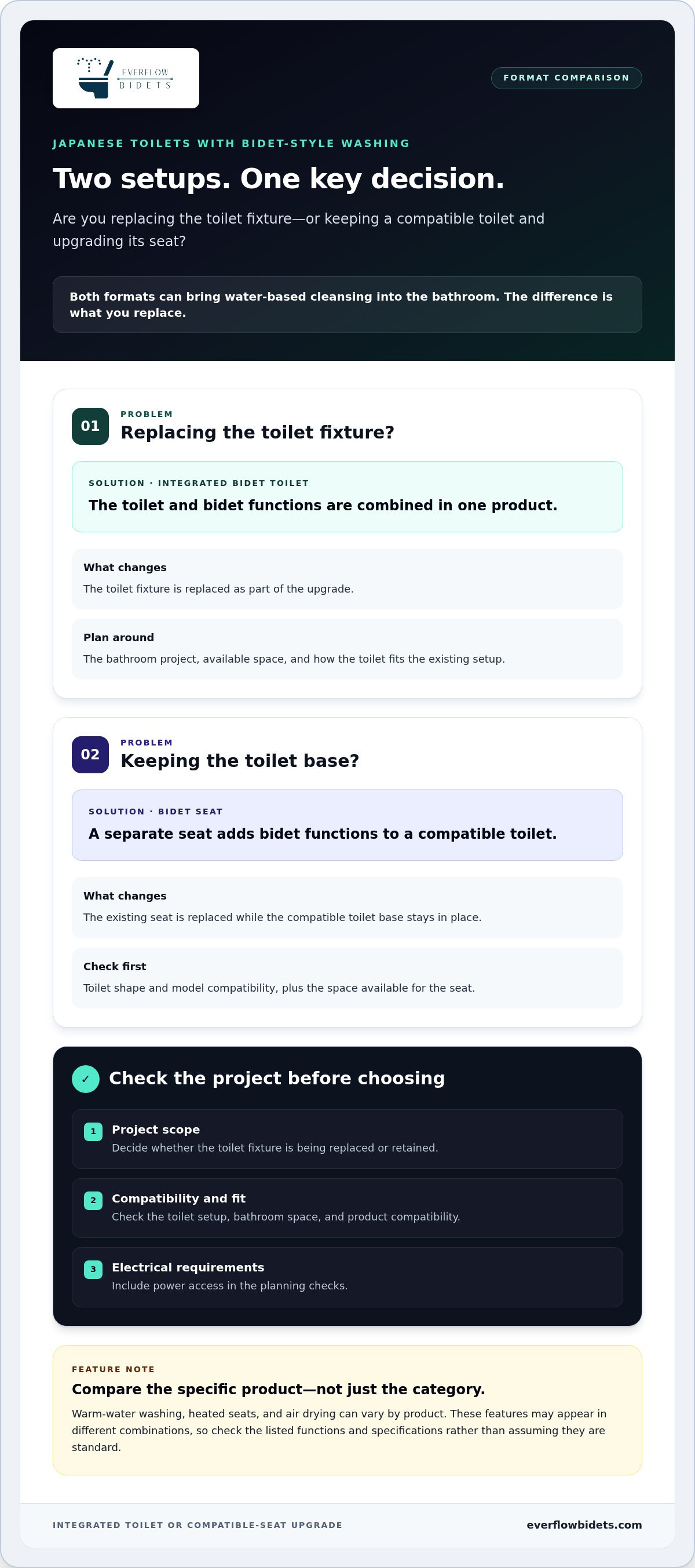
The main decision is whether to replace the toilet and add bidet functions in one step, or keep a compatible toilet and upgrade its seat. An integrated bidet toilet combines the fixture and washing functions in one product. A bidet seat adds washing functions to an existing toilet, provided the seat and toilet are compatible. Start by deciding how much of your current setup you plan to change.
| Factor | Integrated bidet toilet | Bidet seat |
|---|---|---|
| Format | Toilet and bidet functions are combined in one product. | A separate seat adds bidet functions to a compatible toilet. |
| Scope of replacement | Replaces the toilet fixture. | Replaces the existing toilet seat while retaining the compatible toilet base. |
| Planning considerations | Consider the bathroom project, available space, and the toilet’s fit with the existing setup. | Check the toilet’s shape and model compatibility, along with the space available for the seat. |
Features and requirements vary within both formats. Compare individual products rather than treating “integrated” or “seat” as a complete description of what a model can do.
When Might an Integrated Bidet Toilet Make Sense?
An integrated unit may suit a bathroom remodel or a project where the toilet is already due for replacement. Because the fixture and bidet functions come as one product, you can evaluate the complete setup instead of selecting a seat for a toilet you plan to keep. Browse the bidet toilet collection, then compare product dimensions and requirements with your bathroom plans.
When Might a Bidet Seat Be the Practical Upgrade?
A bidet seat may suit a project where you want to keep your existing toilet and add washing functions without replacing its base. Compatibility matters: toilet shape and model can affect whether a particular seat fits. Review those details before choosing from the bidet toilet seat collection. This option can limit the scope of the project, but the seat still needs to fit the toilet in your bathroom.
To decide, ask what you’re changing: the toilet or only the seat. If the fixture is part of a planned replacement, compare integrated options. If it’s staying, start with seat compatibility. Then consider the available space and product requirements for either format. This sequence helps you focus on options suited to your project without assuming one configuration is best for every bathroom.
How to Decide Whether a Japanese Toilet Fits Your Home
Start with the project, not the feature list. Are you replacing the toilet as part of a remodel, or upgrading the seat on a fixture you plan to keep? That answer narrows the options. Next, check the room, the existing toilet, and the product’s requirements to see whether a Japanese toilet setup fits your plans.
Use this checklist to organize your planning:
- Define the project scope. Decide whether the toilet itself will be replaced or whether you want to keep it and change its seat.
- Check compatibility. For a seat upgrade, identify the toilet’s shape and model, then compare them with the seat’s stated fit requirements.
- Measure the space. Note the toilet’s dimensions and the clearance around it. Compare these measurements with the product specifications, including any space needed for controls or access.
- Review power access. If you’re considering an electronic model, note the location of nearby power and compare it with the product’s electrical requirements.
- Think about everyone who uses it. Consider which controls feel clear and comfortable for household members, including anyone who may benefit from simpler operation or added independence.
These checks help you determine whether an option suits the room and the people who will use it. Installation needs can differ between a complete toilet and a replacement seat, so review the specific product instructions. Don’t assume products in the same category have identical requirements.
What Should You Measure and Check Before Shopping?
Measure the existing toilet and surrounding clearance, then compare those details with the dimensions and fit information for the product you’re considering. If you plan to keep the toilet and add a seat, note its shape and model. For either configuration, review the product’s stated electrical and installation requirements before purchase. These checks can help surface fit and planning questions early.
Which Features Matter for Comfort, Access, and Maintenance?
Prioritize functions your household will actually use. A control layout that feels intuitive may be more useful than extra settings that add complexity. Consider whether the toilet is easy to clean and whether each person who uses it can reach and operate the controls comfortably. For someone with limited mobility, features that support a more comfortable, independent routine may be worth considering. A toilet is not a medical device.
Once you’ve identified the project scope, checked the space, and considered household needs, compare options against those priorities. Explore bidet toilet options to see formats that may align with your bathroom plans.
Choose a Japanese Toilet Configuration and Explore Your Options
Choosing a Japanese toilet starts with the format, not the feature list. If your project includes replacing the toilet, an integrated bidet toilet may fit the scope. If you plan to keep the existing toilet, a compatible bidet seat may be a more focused upgrade. Once you’ve settled on the format, compare the functions that matter to your household with the requirements of the products you’re considering.
A Simple Decision Path for Comparing Options
Use this sequence to narrow your choices without assuming one configuration suits every bathroom:
- Define the project. Decide whether you’re replacing the toilet or upgrading one you intend to keep.
- Check fit. Compare the product’s dimensions and compatibility information with your bathroom and existing fixture.
- Prioritize functions. Select features based on household routines, preferred controls, and everyday comfort.
- Review product details. Check the exact specifications and stated requirements for each option. Don’t assume details carry across brands or product types.
This keeps the decision grounded in what your home needs. A product with more functions isn’t automatically a better match if those functions don’t suit your routine or the fixture doesn’t fit your plans.
What to Do Next Before Making a Purchase
Before deciding, revisit your measurements, confirm compatibility where relevant, and compare the product’s stated installation requirements with your bathroom setup. Pay attention to the details that distinguish one model from another, since features and requirements vary. The best comparison matches the individual product to your project instead of relying on broad assumptions about the category.
For additional selection context, the luxury bidet toilet selection guide can help frame the options. As one example of the integrated format, the TOTO G5A bidet toilet is a product to compare against your fit and feature priorities. Review its specific product details rather than applying assumptions from another toilet or brand.
Take the time you need to compare. When you’re ready, explore bidet toilet options and consider which format best matches your bathroom plans and daily routine.
Make Your Bathroom Upgrade a Confident Choice
Think of this decision as shaping a routine you’ll use every day, not simply adding a new fixture. A Japanese toilet setup should make sense for the people in your home and the bathroom you have. Picture how it will fit into daily life, including who will use the controls and what would make the experience comfortable and straightforward.
EverFlow Bidets offers bidet toilets, bidet seats, and bidet toilet combinations, including options from TOTO, Horow, Bio Bidet, and Cascade. These formats give you different ways to match your priorities with product details. Focus on the configuration that suits your project, then compare the specific options at your own pace.
Ready to compare your options? Explore bidet toilet options and find a setup to consider for your home. Choose a format that fits your bathroom plans and the routine you want.
Frequently Asked Questions
What is a Japanese toilet?
A Japanese toilet generally refers to a toilet setup associated with bidet-style washing. The phrase is a category label, not a promise that a product includes a particular control or comfort option. Treat the name as a starting point: check whether the product is an integrated toilet or a seat, then review its detailed feature list. This makes it easier to compare products by function rather than terminology alone.
Is a Japanese toilet the same as a bidet toilet?
The terms often overlap, but emphasize different things: “Japanese toilet” is a broad consumer label, while “bidet toilet” highlights the washing function. For shoppers, the product details matter more than the label. Check whether the listing describes a complete fixture or a seat, then compare its functions with your expectations.
Can you add Japanese toilet features to an existing toilet?
Yes. A bidet seat can add washing functions to an existing toilet if the products are compatible. Before shopping, note the toilet’s brand and model from its documentation, if available. Compare the toilet’s shape and model with the seat’s fit information instead of relying on appearance or assuming seats fit every toilet.
Do Japanese toilets need electricity?
Some do, particularly products with powered functions. Electrical requirements depend on the model, so use its specifications rather than assuming another model has the same needs. As you compare options, note the stated requirements alongside the functions you want. Including power access in your bathroom planning can help you account for the product you choose.
Are Japanese toilets difficult to install?
There isn’t one difficulty level that applies to every model or bathroom. The work involved depends on the product and the scope of the project. Read the installation instructions for the exact unit before deciding. They explain the tasks involved and help you assess the project in light of your experience and available tools.
Are Japanese toilets suitable for older adults or people with limited mobility?
They may suit some users’ preferences, but comfort and ease of use are personal. Consider whether the controls are easy to see and reach from a seated position, and whether the layout works for the person using the bathroom. Preferences may differ among people sharing a toilet. Focus on day-to-day needs, and consult a qualified healthcare professional about equipment related to a medical or care need.
Does a Japanese toilet replace toilet paper completely?
No, not necessarily. There’s no single routine every user must follow, and choosing a water-washing function doesn’t require giving up toilet paper. Some people may prefer to use paper afterward; others may use an available drying function. Consider what feels comfortable and practical for your household, then check whether the product includes the functions you want.
Disclaimer
The information provided in the EverFlowBidets blog is for general informational and educational purposes only. While we strive to publish accurate, current, and well-researched content, nothing on this website should be considered medical advice, diagnosis, or treatment. Articles discussing the potential health, hygiene, accessibility, or environmental benefits of bidet use are based on publicly available research, manufacturer information, and other reputable sources. Individual results may vary, and any health-related decisions should be made in consultation with a qualified healthcare professional.