

What if the most useful caregiving technology isn’t the most advanced device, but a practical tool that makes a familiar daily routine easier? Repeated hands-on help with personal care can be physically and emotionally demanding. It’s understandable to wonder whether technology will genuinely help or simply add complexity and intrude on a loved one’s privacy. Reducing caregiver burden with technology starts with identifying a real need and choosing support that respects the person receiving care.
Thoughtful tools can make everyday tasks simpler while preserving choice and independence. The right solution doesn’t need to replace personal care or human connection. It should make a routine easier to manage without creating a new set of demands.
This article explores practical options such as reminders, home safety tools, communication technology, and personal hygiene support. Bidet seats, bidet-toilet combinations, and bidet toilets may be worth considering as part of a broader care plan, depending on a person’s preferences and abilities. You’ll also learn how to weigh usability, privacy, safety, and upkeep so you can focus on tools that offer meaningful support, not unnecessary complexity.
Key Takeaways
- Start with a specific caregiving task that feels demanding, then consider whether a tool can make it simpler without creating extra work.
- When reducing caregiver burden with technology, weigh the user’s effort, caregiver involvement, privacy, and ongoing maintenance.
- Introduce new tools through shared decision-making: agree on a task, try a simple option, and review how well it works.
- Consider bidet seats, bidet-toilet combinations, or bidet toilets as optional personal hygiene supports that may help reduce some hands-on assistance.
What caregiver burden looks like in everyday care, and where technology fits
Caregiving can be meaningful and deeply personal, but recurring responsibilities can also place demands on a person’s time, energy, and attention. Caregiver burden is the physical effort, emotional strain, time pressure, and coordination work that can build up while supporting another person. The experience varies. A task that feels manageable in one care arrangement may be tiring or difficult in another. The broader concept of caregiver burden helps describe these overlapping demands without suggesting every caregiver feels the same way.
The load often comes from accumulation rather than one dramatic event. A morning reminder, help moving safely through the home, meal preparation, household tasks, and assistance with personal hygiene may each take only part of the day. Together, they can leave less time for rest, work, or simply sharing an ordinary moment with a loved one. Caregiving isn’t uniformly negative, though. Support can express commitment, and the right tools may help preserve time and choice within the routine.
Which daily care tasks can become demanding?
Needs depend on the person’s abilities, preferences, home setting, and care arrangement. One person may want occasional help remembering appointments; another may need hands-on support with mobility or bathroom routines. A caregiver might also coordinate household tasks or keep track of changing plans. Don’t assume age alone determines what support someone needs. Start with the actual task and ask what the person can do, and wants to do, independently.
What should technology do, and what should it not do?
Technology is most useful when it supports a specific routine, improves communication, or makes a selected activity easier. A reminder might prompt a task, for example, while a bathroom hygiene tool may help someone manage part of a personal-care routine with less hands-on assistance. These are possible supports, not guaranteed outcomes. The person using a tool should have a say in whether it feels comfortable and appropriate.
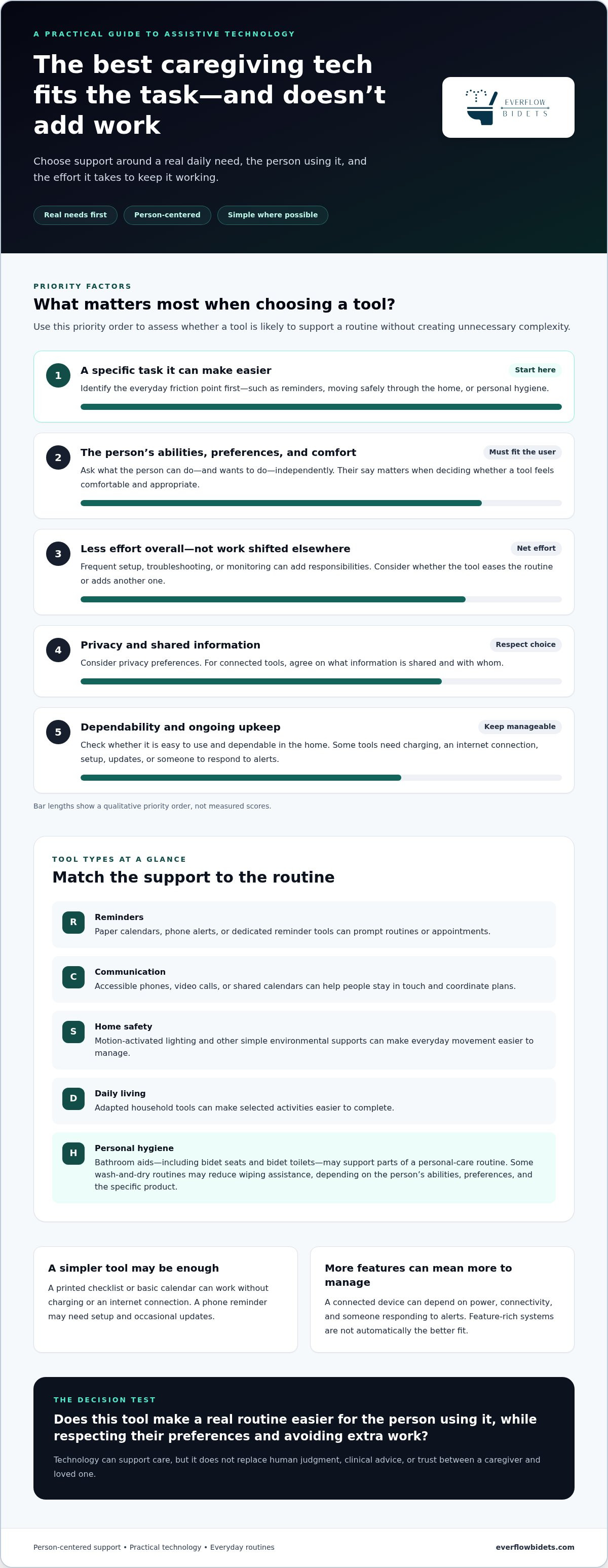
Good fit matters more than novelty. Consider whether a tool is easy to use, dependable in the home, and acceptable to the person’s privacy preferences. If it requires frequent setup, troubleshooting, or monitoring, it may shift work rather than reduce it. That’s an important test when reducing caregiver burden with technology: does the tool ease a real friction point, or add another responsibility?
Technology can support care, but it can’t replace human judgment, clinical advice, or the trust between a caregiver and loved one. Treat it as one part of a care plan, and revisit its usefulness as needs and preferences change.
How assistive technology can support caregiving without adding complexity
Assistive technology is most helpful when it addresses a real task in a person’s daily life. The World Health Organization describes assistive technology broadly, encompassing products and systems that support functioning and independence. In caregiving, that can mean a simple aid for one routine, not necessarily a connected device or complex system. Assistive technology is useful when it fits a real care task, works for the person using it, and doesn’t create more work than it removes.
Different tools serve different purposes:
- Reminders: Paper calendars, phone alerts, or dedicated reminder tools can prompt routines or appointments.
- Communication: Accessible phones, video calls, or shared calendars can help a person stay in touch and coordinate plans.
- Home safety: Motion-activated lighting or other simple environmental supports can make everyday movement easier to manage.
- Daily living: Adapted household tools can make selected activities easier to complete.
- Personal hygiene: Bathroom aids, including bidet seats and bidet toilets, may support parts of a personal-care routine.
These options aren’t interchangeable, and no single tool suits everyone. A shared calendar, for example, can make appointments visible to the people involved, but it won’t automatically resolve scheduling challenges or reduce care hours.
Technology for reminders, communication, and home routines
Start by considering how much ongoing attention a tool needs. A printed checklist or basic calendar can work without charging or an internet connection. A phone reminder may need setup and occasional updates, while a connected device can depend on power, connectivity, and someone responding to alerts. Agree on what information is shared and with whom. Privacy settings matter, as do the care recipient’s preferences and comfort with the tool.
Technology for personal care and bathroom routines
Bathroom technology can offer another kind of practical support. Some bidet seats and bidet toilets provide a wash-and-dry routine that may reduce the amount of wiping assistance a person needs, depending on their abilities, preferences, and the specific product. They’re hygiene options, not medical treatments, and features and operation vary. Let ease of use and the person’s comfort with the routine guide the decision.
If you’re considering this type of bathroom support, explore the bidet toilet seat range as one option within a broader care plan. A simpler tool may be more valuable than a feature-rich system if it fits the routine and is easy to maintain. Thoughtful choices can make bathroom hygiene technology part of a practical approach to reducing caregiver burden with technology, without expecting devices to replace human care or judgment.
How to judge whether a caregiving technology will genuinely help
A device is useful only if it makes a real task easier for the person receiving care and the caregiver. Before choosing one, name the recurring friction point. Is a routine hard to remember, awkward to complete, or dependent on hands-on help? Then consider whether the proposed tool reduces that difficulty or simply transfers the work to setup, troubleshooting, or ongoing monitoring.
A practical fit check before introducing a device
Include the care recipient in the decision as much as possible. Talk through what they want help with, what they prefer to do themselves, and what feels comfortable or private. For personal care, dignity can depend on small details: having control over the routine, avoiding unnecessary observation, and accepting help in a way that feels respectful. A device that works technically but feels intrusive may not be the right fit.
Look beyond the first use. Consider who will handle setup, daily operation, cleaning, maintenance, and troubleshooting. Check whether the controls and instructions are manageable for the intended user, and identify what happens if the tool stops working. For safety or medical concerns, discuss the situation with an appropriate healthcare or other qualified professional rather than relying on a device to make that judgment.
Compare support with added work and risk
Use this table as a conversation starter, not a universal ranking. Actual effort depends on the person, device, and care setting.
| Example support | User effort | Caregiver effort | Privacy to consider | Maintenance to consider |
|---|---|---|---|---|
| Calendar or reminder | Noticing and acting on the prompt | Setting or updating reminders, if needed | Who can view shared plans or alerts? | Are schedules kept current? |
| Connected alert or monitoring tool | Using or wearing the device, if applicable | Reviewing alerts and deciding how to respond | What information is collected or shared? | Does it need charging, connectivity, or updates? |
| Bathroom hygiene aid | Learning and using the routine | Assistance may still be needed, depending on the person | Does the routine preserve the user’s comfort and privacy? | What cleaning and upkeep are required? |
A basic tool can be more effective than a feature-rich system if it’s reliable and easy to use. Ask who will notice a failure, who can respond, and whether the person can still complete the task if the technology is unavailable. These questions make reducing caregiver burden with technology a practical decision, rather than a search for the most advanced device.
How to introduce caregiving technology respectfully and learn what works
A useful device shouldn’t be imposed as a solution to someone else’s routine. The person receiving care should have a voice in what support is introduced, especially if it involves personal information, monitoring, or intimate tasks. A respectful trial starts with conversation, focuses on one defined need, and leaves room to change course.
Agree on a task, choose a simple option, try it together, then review how it feels and functions. That process keeps the focus on the person, not the technology.
Start with consent, comfort, and one defined task
Ask which routine feels difficult and what kind of help would feel welcome. The answer may be a reminder, a communication aid, or support with a personal-care task. Before using a device that collects or shares information, agree on what it records, who can see it, and when alerts may be sent. Choose one manageable use case first instead of changing several familiar routines at once.
Make the trial collaborative. Explain what the tool does in plain language, let the person explore it at their own pace, and make sure they can express discomfort or ask to pause. For instance, if a reminder feels intrusive, the timing or wording may need to change. If the person doesn’t want monitoring, that preference should shape the plan.
Review, adapt, or stop when the tool is not working
Set a review point that makes sense for the routine, then talk through a few practical questions:
- Did the tool make the agreed task easier to complete?
- Could the person use it comfortably and with the privacy they wanted?
- Did setup, alerts, charging, cleaning, or troubleshooting add work?
- Was the tool dependable, and was it clear what to do if it failed?
Use the answers to adjust settings, simplify the routine, or stop using the tool. A device that creates confusion, feels intrusive, or proves unreliable may not be a good fit. Discontinuing it isn’t a failure; it’s a useful finding about what works for this person and care arrangement. That’s the practical heart of reducing caregiver burden with technology: test a tool against a real need, then keep it only if it supports the routine without undermining choice or comfort.
If bathroom hygiene is the task you’re exploring, you can browse bidet options for personal care routines as part of that considered process.
Where bidet technology may fit in a person-centered care plan
Personal hygiene is one area where a practical bathroom aid may support a person’s routine and offer more privacy. Bidet technology isn’t essential for every care plan, and it isn’t a medical treatment. For some users, a wash-and-dry routine may reduce the amount of wiping assistance they need. The effect depends on the individual, their comfort with the device, and how easily they can use it.
Bidet seats and bidet toilets as bathroom support options
A bidet toilet seat fits a compatible existing toilet. A bidet-toilet combination brings the toilet and bidet functions together in one fixture. These are broad categories, not guarantees of particular features. Operation and functions vary by product, so review the details of the specific option you’re considering.
Think through the full bathroom routine, not just the hygiene feature. Can the person reach and use the controls comfortably? Does the bathroom layout suit their movement and transfer preferences? Who will handle routine cleaning, and is the person comfortable with the change? If having a lid designed to be sat on matters to the user’s seating preferences, sittable-lid bidet options may be relevant to explore. Suitability still depends on the person and bathroom setup.
Keep dignity and personal choice at the center
Discuss the idea before changing an intimate routine. Ask what kind of support the person wants, whether they’d like to try the device, and what would help them feel comfortable and in control. Some people may welcome a tool that lets them manage more of the routine privately; others may prefer familiar assistance. Neither preference is wrong. A device should support the person’s choices rather than set expectations for what they ought to do independently.
Before deciding, consider whether the routine is straightforward for the intended user and whether cleaning and upkeep are manageable for the household. If the device feels confusing, uncomfortable, or inconvenient, it may not be the right fit. Bidet technology is one optional support among many, not a substitute for care or a reason to rush a decision. That measured approach is central to reducing caregiver burden with technology: focus on a task the person wants help with, then assess whether the tool supports their comfort and autonomy.
For a low-pressure next step, explore bidet options for your bathroom and consider which type may suit the person’s preferences and daily routine.
Choose practical support that respects independence
Reducing caregiver burden with technology starts with a specific need, not a long list of devices. The most useful tools support a task without adding more effort, and they should fit the care recipient’s preferences, privacy, and abilities.
Start small. Agree on one routine to address, consider the work involved in using and maintaining a tool, and review together whether it’s helping. Technology can offer practical support, but it doesn’t replace personal connection, caregiver judgment, or professional guidance when safety or medical questions arise.
For bathroom hygiene, bidet seats, bidet-toilet combinations, and bidet toilets are options to consider as part of a wider care plan. Their suitability depends on the person’s comfort, routine, and bathroom. EverFlow Bidets’ online store lets you browse these categories and purchase products directly.
Explore bidet options for your bathroom at your own pace. A thoughtful choice can support everyday comfort while keeping dignity and personal choice at the center of care.
Frequently Asked Questions
Can technology reduce caregiver burden?
Yes, technology may ease specific caregiving tasks, but it won’t help in every situation. A reminder might support a routine, while a bathroom aid may help someone manage part of personal care. The key is choosing a tool that addresses a real need without adding more setup, monitoring, or maintenance than it’s worth. Technology supports caregiving; it doesn’t replace human care, judgment, or clinical advice.
What technology can help family caregivers?
Useful options depend on the task. Calendars and reminders can support schedules, communication devices can help people stay connected, and home safety tools can assist with selected routines. Daily living aids and bathroom hygiene products may also be relevant. Some tools work with little ongoing input, while others need charging, connectivity, updates, or someone to respond to alerts. Start with the routine that’s most important to support.
Can a bidet help reduce caregiver assistance with personal hygiene?
A bidet may reduce some wiping assistance for some users, depending on their abilities, preferences, and comfort with the routine. Bidet toilet seats and bidet toilets are personal hygiene options, not medical treatments, and features vary by product. Consider whether the person can operate the device comfortably and whether bathroom fit and cleaning needs are manageable. Their preferences should guide whether it’s worth trying.
How do I choose technology for someone I care for?
Begin by asking the person which task they’d like help with and what kind of support feels acceptable. Compare options for ease of use, privacy, reliability, and ongoing care, including setup and cleaning. Try one manageable tool at a time, then review together whether it helps. For safety or medical concerns, discuss appropriate options with a qualified professional rather than relying on technology alone.
Can caregiving technology compromise privacy?
It can, especially if a device collects information, sends alerts, or allows others to monitor activity. Before using it, discuss what data is gathered, who can access it, and what gets shared. Review privacy settings and respect the care recipient’s wishes about monitoring. For personal-care tools, consider whether the device supports a routine privately and comfortably. Consent and clear expectations matter as much as convenience.
What should I do if a caregiving device adds more work?
Review whether the device is solving the task it was chosen for. If alerts, charging, setup, troubleshooting, or maintenance create extra demands, simplify the settings or change how it’s used. Ask the person receiving care how it feels, too. If it remains confusing, intrusive, or unreliable, stopping the trial is reasonable. Reducing caregiver burden with technology means keeping tools that fit, not persisting with a poor match.
Disclaimer
The information provided in the EverFlowBidets blog is for general informational and educational purposes only. While we strive to publish accurate, current, and well-researched content, nothing on this website should be considered medical advice, diagnosis, or treatment. Articles discussing the potential health, hygiene, accessibility, or environmental benefits of bidet use are based on publicly available research, manufacturer information, and other reputable sources. Individual results may vary, and any health-related decisions should be made in consultation with a qualified healthcare professional.