

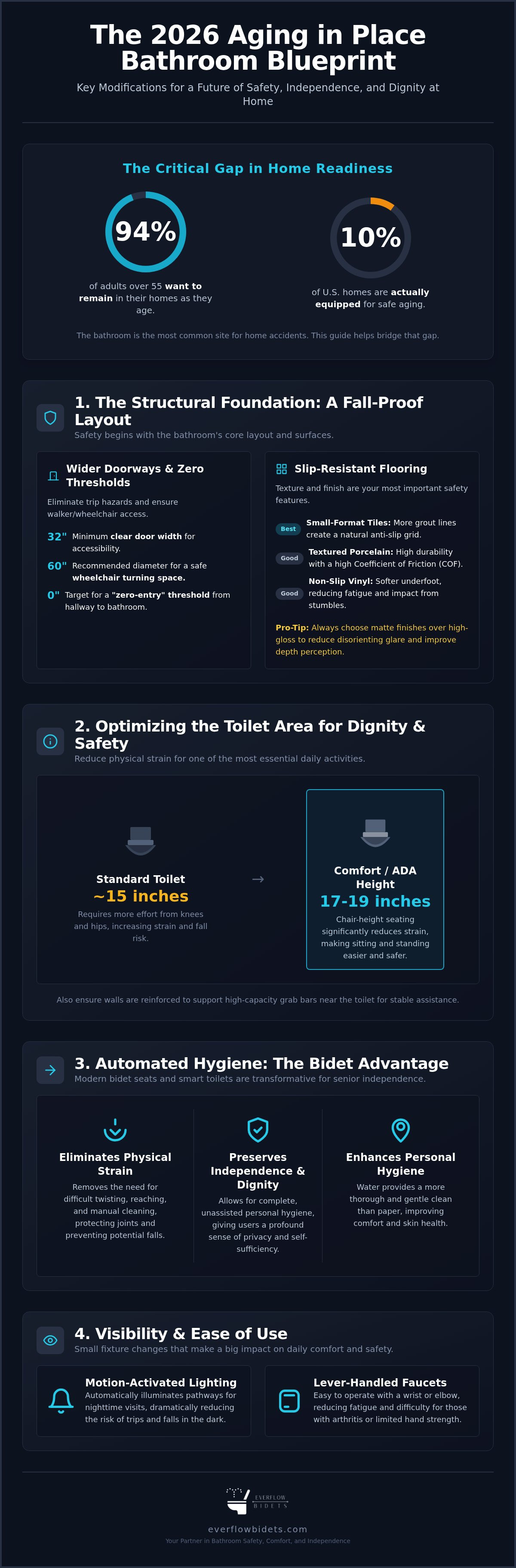
Did you know that while 94% of adults over 55 want to stay in their homes as they age, only 10% of American houses are actually equipped to let them do so safely? It's a sobering reality, especially when you consider that the bathroom is where most home accidents happen. You likely value your independence and want to maintain your privacy without the fear of a slip or the frustration of difficult hygiene routines. You deserve a space that reflects your standards of living while providing the security you need for the years ahead.
This comprehensive 2026 aging in place bathroom checklist is designed to bridge the gap between high-end luxury and essential daily care. We'll show you how to transform your bathroom into a sanctuary of safety and dignity through expert-backed remodeling strategies and modern fixture selections. We'll cover everything from ADA height requirements and zero-threshold showers to the life-changing benefits of advanced bidet systems. This guide provides the roadmap you need to make informed decisions that protect your health and your autonomy for the long term.
Key Takeaways
- Learn the critical structural requirements, including doorway widths and slip-resistant flooring standards, to create a fall-proof foundation.
- Master the essentials of the aging in place bathroom checklist by optimizing toilet height and reinforcing walls for high-capacity grab bars.
- Discover how automated hygiene through bidet toilets preserves independence by eliminating the physical strain of manual cleaning.
- Understand how lever-handled faucets and motion-activated lighting can significantly reduce daily fatigue and nighttime hazards.
- Compare premium fixtures from brands like TOTO and Bio Bidet to find the perfect balance between ADA-compliant safety and refined home design.
The Structural Foundation: Safety and Layout Essentials
Safety starts from the ground up. If the bones of your bathroom don't support your movement, even the most expensive fixtures won't prevent a fall. When building your aging in place bathroom checklist, the layout should be your first priority. You need space to move. While you might not use a wheelchair today, planning for a 60-inch diameter turning space is a wise investment in your future autonomy. This ensures that your home remains functional regardless of changes in your mobility. Understanding what it means to age in place involves looking beyond current needs and preparing for a lifestyle that remains uncompromised by physical limitations.
Slip-Resistant Flooring Solutions
Texture is your best friend in a wet environment. Choosing a floor with a high Coefficient of Friction (COF) rating is a critical safety standard. You aren't just choosing a color; you're selecting a safety feature. Consider these options:
- Small-Format Tiles: These provide superior grip. The increased density of grout lines creates a natural anti-slip grid that large, smooth tiles lack.
- Textured Porcelain: This material offers extreme durability and is available in finishes that mimic stone while providing a high COF.
- Non-Slip Vinyl: This is a resilient choice that's softer underfoot, which can reduce fatigue and offer a slight cushion in the event of a stumble.
We also recommend opting for matte finishes. High-gloss floors create glare that can be disorienting for those with declining vision. A matte surface improves depth perception and makes it easier to spot water spills before they become a hazard. This simple visual adjustment is a cornerstone of a smart aging in place bathroom checklist.
Entryways and Thresholds
Accessibility begins at the door. Standard bathroom doors are often too narrow for walkers or wheelchairs. You should aim for a minimum 32-inch clear width. If a full structural remodel isn't feasible, installing swing-clear hinges is a brilliant alternative. These specialized hinges move the door entirely out of the frame when open, gaining you nearly two inches of passage space without moving a single wall. It's a pragmatic solution that prioritizes function over traditional hardware.
Finally, focus on eliminating thresholds. A "zero-entry" environment means the transition between the hallway and the bathroom is perfectly flush. Even a half-inch bump can become a significant trip hazard or an impassable barrier for a rolling walker. Removing these obstacles creates a seamless flow that protects your dignity and your safety every time you enter the room. By checking these structural boxes first, you build a solid foundation for the rest of your home modifications, which can be expertly managed by a premier renovation firm like Ethicore.
Optimizing the Toilet Area for Safety and Dignity
Dignity is often won or lost in the small details of the toilet area. While structural changes like wider doors are essential, the specific configuration of your toilet determines how much independence you maintain on a daily basis. Any comprehensive aging in place bathroom checklist must prioritize ease of movement and stability in this zone. A well-designed toilet area reduces the physical exertion required for basic needs, allowing you to focus on your well-being rather than the mechanics of sitting and standing.
To further support the strength and balance needed for these daily transitions, many seniors turn to low-impact fitness; Reformer Pilates instructors often use ReformerFlow by Ginty to design routines that specifically target the core and leg muscles required for safe sitting and standing.
According to AARP's aging in place checklist, modifications like raised toilets and grab bars are among the most effective ways to prevent bathroom falls. Beyond safety, these upgrades provide a sense of security that empowers you to use your space without assistance. It's about creating a bathroom that works for you, rather than forcing your body to adapt to outdated standards. Proper planning here eliminates the frustration of struggling with low seating or precarious reaching.
Comfort Height vs. Standard Toilets
The standard toilet height of approximately 15 inches is often too low for those with limited mobility. Upgrading to a "Comfort Height" or ADA-compliant toilet, which sits between 17 and 19 inches from the floor, makes a profound difference. This extra height mimics the elevation of a standard chair. It reduces the distance your hips and knees must travel, significantly lowering the strain on your joints. You can explore our ADA height toilets guide to find a model that matches your specific stature. For many, this small adjustment is the difference between needing help and remaining self-sufficient.
Strategic Grab Bar Placement
Stability requires more than just a place to hold on; it requires a secure anchor. When installing grab bars, you must use reinforced wall blocking. Standard drywall won't support the weight of a person during a slip. Your bars need to handle at least 250 pounds of force. Horizontal bars are excellent for pulling yourself up, but an "L-shaped" bar provides both a horizontal pull point and a vertical grip for stabilizing your balance while standing. Many modern designs now offer integrated grab bars that double as toilet paper holders. These provide a sophisticated, non-clinical look that maintains the aesthetic of a luxury home while offering essential support.
Clearance is the final piece of the puzzle. Ensure there's at least 18 inches of clear space from the center of the toilet to the nearest wall. This provides enough room for a caregiver to assist if necessary or for you to manage transfers from a walker. Positioning the toilet paper holder within 7 to 9 inches of the front of the toilet bowl prevents over-extension, which can lead to a loss of balance. If you're looking for the ultimate upgrade in autonomy, consider exploring our bidet toilet combinations, which automate hygiene and further reduce the need for reaching or twisting.
Automated Hygiene: The Bidet Advantage for Seniors
While structural changes like slip-resistant floors and grab bars provide the physical safety net, hygiene automation addresses the intimate daily tasks that often cause the most stress. For many seniors, maintaining personal cleanliness is a significant challenge due to limited range of motion or joint pain. A comprehensive aging in place bathroom checklist isn't complete without considering how technology can replace the physical strain of manual wiping. By automating these processes, you preserve your privacy and maintain your dignity without needing to rely on a caregiver for basic hygiene.
Transitioning from paper to water-based cleaning offers substantial comfort benefits. Gentle, warm water washing can significantly reduce skin irritation compared to the abrasive nature of traditional paper. This improved hygiene is vital for maintaining skin integrity and managing the risk of urinary tract infections, which are common concerns as we age. While these features provide a higher standard of cleanliness, we always encourage you to consult with your healthcare professionals for specific medical advice regarding your condition. This ensures your choices are backed by expert guidance tailored to your health history.
Eliminating the Wiping Struggle
Physical dexterity often declines with age, making the reaching and twisting required for traditional cleaning difficult. Advanced bidet seats are a practical solution because they retrofit directly onto your existing comfort-height toilet. This upgrade allows individuals with arthritis or limited mobility to manage their own care with the touch of a button. It's a pragmatic investment that pays dividends in self-confidence and personal autonomy, allowing you to stay in control of your daily routine.
Smart Features for Senior Comfort
Modern bidet technology includes features specifically engineered for the challenges of aging. These tools reduce the physical "work" of the bathroom while enhancing safety. Automatic open/close lids remove the need to bend down or reach, which helps you maintain your balance and prevents falls. Heated seats and warm air dryers prevent the discomfort of cold surfaces and the "chilling" effect after washing, which is particularly beneficial for those with poor circulation.
By integrating these smart features, you transform a standard fixture into a specialized tool for longevity. For instance, remote controls with large, backlit buttons provide high visibility for those with declining eyesight. Night lights integrated into the bowl, such as those found on premium TOTO WASHLET models, prevent disorientation during late-night visits. These thoughtful additions ensure that your aging in place bathroom checklist addresses both your current comfort and your future safety requirements in a way that feels sophisticated rather than clinical.
Visibility and Ease of Use: Lighting and Fixtures
Visibility is the silent guardian of bathroom safety. Even the most structurally sound room becomes a hazard in poor lighting or when fixtures are difficult to operate. A thorough aging in place bathroom checklist must address how the eyes and hands interact with the environment. As vision declines and grip strength softens, standard household items can become obstacles. Transitioning to intuitive, high-visibility solutions isn't just about convenience. It's about reducing the cognitive and physical load of daily tasks.
Color contrast is a frequently overlooked safety feature. By ensuring a high contrast between your fixtures and the walls, such as a dark vanity against a light wall, you improve depth perception. This helps prevent misjudging distances when reaching for a sink or sitting down. Similarly, switching from traditional toggle switches to rocker-style light switches provides a much larger surface area. This allows you to operate lights with a palm or elbow if finger dexterity is compromised. These small adjustments create a more forgiving environment that supports your independence.
Lever Handles and Touchless Tech
Lever-handled faucets are the gold standard for universal design. Unlike round knobs that require a tight "pinch and twist" motion, levers can be operated with a simple push. This is a game-changer for anyone managing arthritis or limited hand strength. For an even more seamless experience, touchless faucets eliminate the need for physical contact entirely, which also helps prevent the spread of germs. In the shower, a pull-down shower head is essential. It allows for a thorough wash while seated on a bench, providing flexibility that fixed shower heads simply cannot match. If you're looking for the ultimate in hands-free convenience, explore our smart bidet toilets which feature motion-activated lids and automated flushing.
Layered Lighting Strategies
A single overhead light often creates deep shadows that can hide spills or trip hazards. A layered strategy is far superior. Combine ambient lighting for general illumination with focused task lighting around the vanity and shower. This reduces glare and ensures that every corner of the room is clearly visible. For nighttime safety, incorporate motion-activated night lights that illuminate the path from the bedroom to the toilet. These sensors remove the need to fumble for a switch in the dark, significantly lowering the risk of a fall during late-night visits. By 2026, smart bulbs with voice control have become a standard recommendation, allowing you to adjust brightness or turn lights on entirely hands-free. This integration of technology and design ensures your bathroom remains a safe, navigable space at any hour.
Standout Senior-Friendly Solutions: Choosing Your Fixtures
Selecting the right fixtures is the final, most impactful step in completing your aging in place bathroom checklist. You don't have to settle for clinical, hospital-grade equipment that compromises the aesthetic of your home. Modern bathroom technology allows for a seamless blend of high-end luxury and life-saving functionality. By choosing products designed with universal principles in mind, you invest in a space that feels like a spa while functioning as a fortress of safety. The goal is to automate as many physical tasks as possible, reducing the daily burden on your body and preserving your energy for the things you enjoy.
Integrated Smart Toilets
Integrated units represent the pinnacle of bathroom safety and refinement. The TOTO Neorest NX1 is a premier example of this balance. It features an automatic flush and an elongated bowl that meets ADA height standards, which we previously identified as crucial for joint health. If you're looking for simplicity and high performance at a more accessible price point, the Bio Bidet DLX is an excellent choice. Its tankless design isn't just about modern style. It creates extra floor space, making it much easier to maneuver walkers or wheelchairs in tight quarters. These ADA-compliant bidet toilets provide a complete transformation that addresses both mobility and hygiene in one sophisticated package.
Bidet Seats and Lifts
If a full remodel isn't in your immediate plans, a seat upgrade can still provide life-changing benefits. The TOTO S7A Washlet is an easy-to-install option that retrofits onto most existing toilets. It offers the same warm water cleansing and air drying found in integrated models. When comparing the S7 and the TOTO S7 Washlet, the "A" version includes an auto-open/close lid, which is a vital feature for those who find bending or reaching difficult. For individuals with extreme mobility needs, the Dignity Lifts Bidet Toilet Lift provides mechanical assistance for sitting and standing. This ensures that even those with significant physical challenges can maintain their autonomy without a caregiver's help.
Final Checklist: Must-Have Features Before You Buy
- Seat Height: Ensure the final height sits between 17 and 19 inches from the floor.
- Weight Capacity: Verify that the fixture or lift can support your specific requirements.
- Remote Accessibility: Look for large, backlit buttons that are easy to operate with limited dexterity.
- Auto-Functions: Prioritize automatic flushing and lid operation to minimize physical strain.
- Safety Certification: Confirm that all electrical components are UL-listed for wet environments.
By following this aging in place bathroom checklist and selecting fixtures that prioritize both health and dignity, you're not just remodeling a room. You're securing your future in the home you love. For those seeking specialized products to support these changes, FIVESTEP 五步健 offers a comprehensive shopping platform tailored for the elderly and rehabilitants. A safer, more independent daily experience is well within reach through the right combination of logic, empathy, and modern technology.
Secure Your Independence and Peace of Mind
Designing a bathroom that supports your needs doesn't mean sacrificing the elegance of your home. It's about making proactive choices that prioritize your safety and dignity. By focusing on the structural foundations, optimized toilet heights, and the life-changing benefits of automated hygiene, you're building a space that adapts to you. This aging in place bathroom checklist is more than just a home improvement guide; it's a commitment to your long-term quality of life and personal autonomy.
EverFlow Bidets is proud to be an authorized TOTO dealer, offering specialized support for those researching aging-in-place solutions. We provide expert guidance to help you select the right fixtures and offer free shipping on most senior-friendly models to simplify your remodeling process. Browse our curated collection of Bidets for Senior Living today to discover how modern technology can protect your independence. You deserve a bathroom that functions as a sanctuary of health and comfort for many years to come.
Frequently Asked Questions
What is the ideal height for a senior-friendly toilet?
The ideal height for a senior-friendly toilet is 17 to 19 inches from the floor to the top of the seat. This is often called "Comfort Height" or ADA-compliant height. This elevation mimics a standard chair, which reduces the physical exertion required to sit or stand. It's a fundamental element of any aging in place bathroom checklist because it preserves your joint health and daily independence.
Are bidet seats difficult for seniors with arthritis to operate?
Modern bidet seats are significantly easier to operate than traditional toilet paper for those with limited mobility. Instead of the painful twisting and reaching required for manual wiping, these systems use wireless remotes with large, high-contrast buttons. Many models, such as the TOTO WASHLET series, feature intuitive layouts that require minimal finger dexterity. This makes them a superior solution for anyone managing arthritis or reduced wrist strength.
Can I install a bidet on my existing toilet for aging in place?
You can absolutely install a bidet seat on your existing toilet without a full bathroom remodel. Most electronic bidet seats are designed to retrofit onto standard elongated or round toilet bowls. You simply need a nearby GFCI electrical outlet and a standard water connection. This is a cost-effective way to upgrade your bathroom's hygiene capabilities while maintaining your current layout and preserving your budget for other safety modifications.
Do I need a professional plumber to install a smart bidet toilet?
Installing a bidet seat is often a straightforward DIY project, but integrated smart toilets like the TOTO Neorest usually require a professional plumber and electrician. These units often involve specific rough-in requirements and dedicated electrical circuits. Hiring a professional ensures your investment is installed according to local building codes and manufacturer specifications. This provides long-term reliability and safety while protecting the warranty of your high-end bathroom fixtures.
How do bidets help prevent urinary tract infections in older adults?
Bidets promote superior hygiene by using aerated warm water to cleanse the skin more thoroughly than dry paper. This gentle washing helps remove bacteria effectively without the abrasive friction that can cause micro-tears in sensitive skin. Maintaining a higher standard of personal cleanliness can support overall urological health. We always recommend consulting with a healthcare professional for specific medical advice regarding the prevention of infections or other health conditions.
What is the most important safety feature in a senior bathroom remodel?
Slip-resistant flooring with a high Coefficient of Friction (COF) is the most critical safety feature in any remodel. Establishing a stable foundation is paramount since most bathroom injuries result from falls. This should be paired with strategic grab bar placement and motion-activated lighting to create a secure environment. A comprehensive aging in place bathroom checklist must address these environmental hazards first to ensure the space remains truly safe for decades.
Are there bidet options that include a sitting lid for safety?
Yes, specific bidet seats are engineered with reinforced sittable lids that can safely support a person's weight. Most standard electronic bidet lids are thin and not designed for sitting; they can crack under pressure. Choosing a model with a sittable lid provides a secure place to sit while drying off or performing other grooming tasks. This is a valuable feature for those who need a stable rest point to maintain their balance during their routine.
Does Medicare cover the cost of a bidet or smart toilet?
Medicare typically doesn't cover the cost of bidets or smart toilets. These are generally classified as luxury home improvements rather than essential Durable Medical Equipment (DME). However, some private long-term care insurance policies or specific Medicare Advantage plans might offer partial reimbursement for accessibility modifications. It is always wise to check with your specific provider or a tax professional to see if these upgrades qualify as deductible medical expenses.
Disclaimer
The information provided in the EverFlowBidets blog is for general informational and educational purposes only. While we strive to publish accurate, current, and well-researched content, nothing on this website should be considered medical advice, diagnosis, or treatment. Articles discussing the potential health, hygiene, accessibility, or environmental benefits of bidet use are based on publicly available research, manufacturer information, and other reputable sources. Individual results may vary, and any health-related decisions should be made in consultation with a qualified healthcare professional.