

What if the smartest bathroom upgrade isn’t the one with the most features, but the one that fits your space and project? A toilet with built in bidet can mean an integrated smart toilet, a toilet-and-bidet combination, or a bidet seat added to a compatible toilet. These options replace different parts of your existing setup, so the right choice depends on more than appearance.
Before choosing, it helps to know whether a new fixture will fit your bathroom, work with its existing connections, and provide functions you’ll actually use. Comparing configurations and room requirements first can narrow your options without getting distracted by a long list of extras.
This guide explains how integrated toilets, combinations, and bidet seats differ, then walks through practical details to review before choosing, including bathroom dimensions, plumbing, and electrical access. You’ll also learn how to weigh useful features against your household’s preferences. The goal is a confident choice based on fit and everyday needs, not feature count alone.
Key Takeaways
- A toilet with built in bidet may be an integrated toilet, a toilet-and-seat combination, or a bidet seat, so identify the configuration before comparing options.
- Compare how much of your existing toilet setup each configuration replaces to understand the scope of your project.
- Measure the bathroom and review model documentation for rough-in, clearance, water connection, and electrical access.
- Prioritize the cleansing, comfort, operation, and maintenance features that suit your household instead of choosing by feature count alone.
- Compare individual product listings carefully because specifications and included functions can differ by model.
What Does a Toilet With a Built-In Bidet Actually Include?
A toilet with built in bidet integrates cleansing into a toilet setup, but the phrase can describe more than one configuration. It may mean a complete toilet with bidet functions built into the unit, a toilet sold with a compatible bidet seat, or a bidet seat fitted to an existing toilet. The distinction matters because each option involves different products and a different project scope.
Bidets also come in several forms beyond toilet-mounted products. For broader context on the history and types of bidets, including electronic bidets, consult the overview from Wikipedia. For a home bathroom upgrade, shoppers will usually compare toilet and seat configurations.
Integrated bidet toilet, toilet combination, and bidet seat
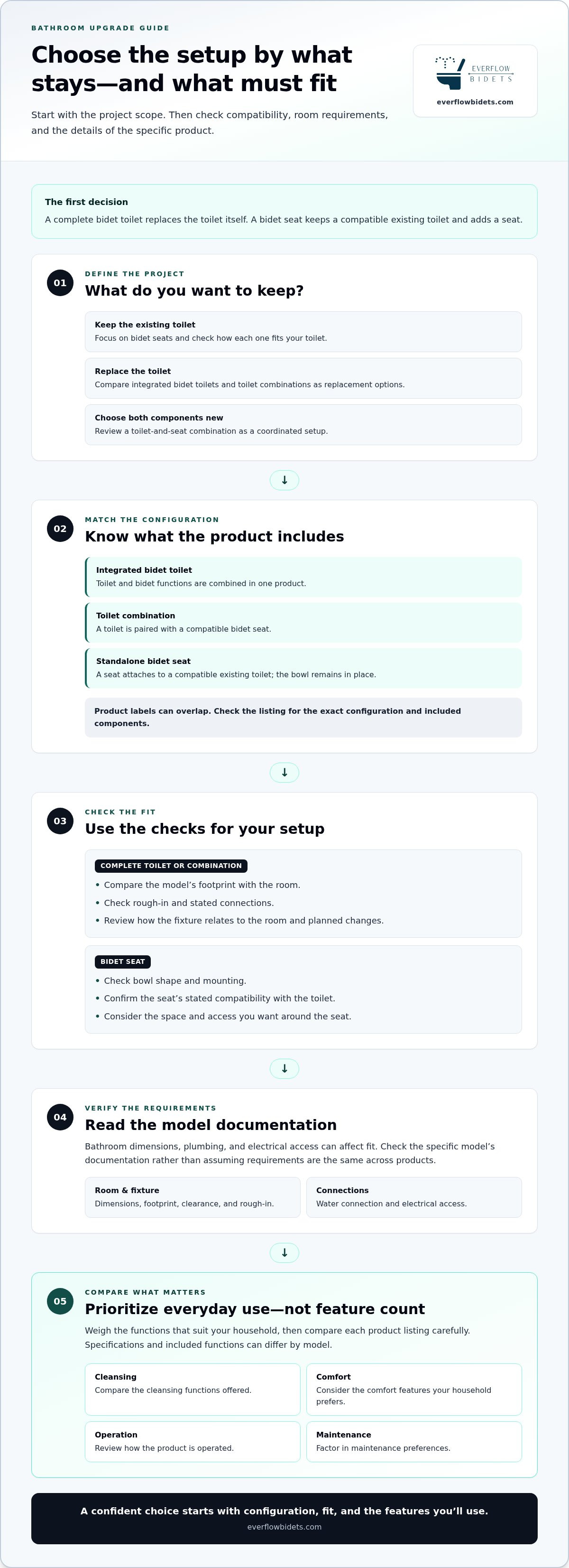
An integrated bidet toilet combines the toilet and bidet functions in one product. A toilet combination pairs a toilet with a compatible bidet seat, creating a coordinated setup from two components. A standalone bidet seat is different: it attaches to a compatible existing toilet, allowing the bowl to remain in place.
Product language can overlap, so check what the listing includes rather than relying on the label alone. For example, the TOTO G5A bidet toilet is listed in the bidet toilet category. Review each model’s details to understand its configuration and included components.
A complete bidet toilet replaces the toilet itself; a bidet seat upgrade keeps a compatible existing toilet and adds a seat.
Why the product category matters before shopping
Configuration is an early project decision, not just a naming detail. Replacing the toilet means comparing the new unit with the existing bathroom setup. Keeping the toilet and adding a seat means checking whether that particular seat fits the bowl and leaves the space and access you want. A combination calls for checking the toilet and seat as a paired setup.
Before comparing features, decide what you want to retain: the current toilet, some existing components, or none of the toilet itself. Then review the product documentation for the specific configuration and its included components. This helps avoid a common mismatch, such as choosing a seat when the project calls for a full replacement or selecting an integrated unit when keeping the current toilet is a priority.
- Existing toilet stays: Compare compatible bidet seats and check how each seat fits your toilet.
- Toilet is being replaced: Compare integrated units and toilet combinations as replacement options.
- Both components are new: Review the toilet-and-seat combination as a coordinated product setup.
Once the category is clear, it’s easier to compare installation requirements and features without treating every model as interchangeable. For a wider overview of selection considerations, the luxury bidet toilet guide can help frame the next steps.
Built-In Bidet Toilet vs. Bidet Seat: Which Setup Fits Your Project?
With the product categories clear, compare how each choice fits the scope of your bathroom project. A complete toilet upgrade may suit a remodel that already includes fixture changes. A seat-focused upgrade may suit a project centered on improving the existing bathroom without replacing every fixture. Let your current plans, room layout, and product requirements guide the decision.
The main distinction is whether the existing toilet remains part of the finished project. Once you know that, compare the fit checks and documentation for the specific model. Requirements vary, especially for water and electrical connections, so don’t treat one product’s specifications as universal. For background on plumbing system design, ASPE offers plumbing engineering resources.
| Comparison | Complete toilet or combination | Bidet seat |
|---|---|---|
| Project scope | Consider as part of a fixture replacement or broader bathroom remodel. | Consider when the project focuses on the current toilet and seat area. |
| Existing-toilet reuse | Plan around the new fixture and its relationship to the room. | Evaluate the current toilet as the foundation for the upgrade. |
| Main fit checks | Compare the model’s footprint, rough-in, and stated connections with the room. | Focus on bowl shape, mounting, and the seat’s stated compatibility. |
| Product configuration | Review the specific product’s included components and requirements. | Review the seat as a separate product and check its fit information. |
When a complete toilet replacement makes sense
A full-fixture upgrade may fit naturally into a remodel where replacing the toilet is already part of the plan. Look beyond the bidet functions: consider how the new fixture’s dimensions and connection locations work with the room and other planned changes. Review the individual product documentation before finalizing the layout, since a coordinated product setup still has model-specific requirements. This approach is useful when you’re planning the bathroom as a whole rather than selecting one isolated upgrade.
When a bidet seat may suit the bathroom better
A seat-focused project keeps attention on the existing bowl and its compatibility with the selected seat. Check the bowl shape and the manufacturer’s fit details, then consider whether the seat’s controls and overall form suit the people who will use it. Comparing bidet toilet seat options can help you assess products against those priorities. Use each listing’s specifications as the reference for that particular model.
For either route, compare your bathroom’s existing conditions with the model’s documentation before deciding. A suitable option is one whose project requirements, fit, and everyday use align with your plans, not simply the one with the longest feature list.
Will a Toilet With a Built-In Bidet Fit Your Bathroom?
The main fit questions are measurable: the toilet’s footprint, available clearance, and whether the room has the connections a specific model requires. A toilet with built in bidet isn’t automatically difficult to fit, but you can’t assume its requirements from another model’s specifications. Use this checklist to compare your bathroom with the product documentation before choosing.
Measure the space and existing toilet setup
Record what’s in the room now, then compare those measurements with the selected product’s drawings and specifications. Keep your notes together so you can evaluate each option against the same information rather than relying on visual estimates.
- Note the rough-in. Record the existing toilet’s rough-in measurement using the method described in the product documentation. This helps you compare the current drain location with the replacement model’s requirements.
- Measure the existing toilet. Record its overall length, width, and height, along with the bowl shape if you’re considering a bidet seat. These details provide a useful baseline, but don’t assume a new unit will match the old one.
- Map the available clearance. Measure the space around the toilet, including the distance to nearby walls, cabinets, doors, and other fixtures. Check that the door can open freely and that there’s comfortable room to use and clean around the fixture.
- Compare, don’t approximate. Review the selected model’s dimensions and fit information. Check each relevant measurement against your notes and look at diagrams to understand the fixture’s shape and position, not just its overall size.
Review water and electrical requirements
Make a separate note of the existing water connection and its location, then compare it with the model’s water-supply instructions. Powered functions may also require electrical access, depending on the product. Check the individual model’s electrical specifications and the location of available access in your bathroom. Don’t assume every bidet toilet needs the same setup.
- Compare the water-supply details in the product documentation with the connection in your bathroom.
- Check whether the model requires electrical access and whether your room’s layout can accommodate it.
- Record any mismatch or unanswered question before deciding on a product or bathroom change.
Requirements vary by model, so use the manufacturer’s current product information for dimensions, connections, and installation details. If you’re comparing a seat upgrade with a complete toilet replacement, keep their fit checks separate: one depends on compatibility with the existing toilet, while the other depends on the new fixture’s dimensions and connections.
A mismatch doesn’t automatically rule out an upgrade. It tells you what needs to be resolved before purchase, whether that means confirming a measurement, choosing a different configuration, or accounting for a bathroom adjustment in a remodel. Once the dimensions and connection requirements line up with the documentation, you can compare the functions that suit your household.
Which Built-In Bidet Features Are Worth Comparing?
Feature lists can make one model appear more impressive than another, but the useful question is simpler: which functions will make everyday use more comfortable and straightforward for your household? For a toilet with built in bidet, compare core cleansing functions first, then weigh optional conveniences against how you expect to use and maintain the product.
Match functions to the way you use the bathroom
Start with the basics. Review how the bidet wash operates and what adjustments the model offers. Controls and settings vary, so read the product details rather than assuming a familiar feature name works the same way across manufacturers. A function that’s central to one person’s routine may be unnecessary for another.
Next, separate everyday priorities from extras. Depending on the model, optional conveniences may include a heated seat, warm-water control, or an automatic lid. These features can add comfort or reduce manual steps, but they aren’t essential for every household. Consider who will use the toilet, which controls they’ll need, and whether the added functions matter enough to influence your choice.
- Cleansing: Understand the available wash functions and how the user selects or adjusts them.
- Comfort: Decide whether features such as a heated seat or temperature control matter in your daily routine.
- Operation: Consider whether the controls are clear and convenient for everyone who’ll use the toilet.
- Convenience: Treat automatic functions as preferences to compare, not requirements to assume.
Use manufacturer-listed functions as examples, not promises about the whole category. If a feature matters to your decision, confirm that it appears in the specific model’s documentation and understand how it operates.
Consider ease of use, cleaning, and accessibility
A feature adds value only if household members can use it comfortably. Look at the control layout and product information, and consider whether the interface seems clear for the people who will use it. If ease of access is a priority, review the manufacturer’s accessibility information alongside the bathroom’s layout rather than relying on a general feature label.
Cleaning deserves attention, too. Review the care instructions for the toilet, seat, and any listed components so you know what routine maintenance involves. Don’t assume that a self-cleaning or hygiene-related feature eliminates regular cleaning; follow the model’s instructions for care and upkeep.
For health-related questions about whether a bidet function is appropriate for an individual, consult a healthcare professional. Product features can support personal preferences, but they shouldn’t be treated as medical advice or a guaranteed health benefit.
Make a short list of must-haves and nice-to-haves, then compare models against it. That keeps the decision grounded in daily comfort, operation, cleaning, and maintenance rather than the length of a feature list. Explore bidet toilet options to compare configurations and functions for your project.
How to Choose and Shop for the Right Built-In Bidet Toilet
A good buying decision follows a clear order: choose the configuration, check the bathroom fit, prioritize the functions you’ll use, then review the specific product documentation. This keeps your toilet with built in bidet search focused on what matters at home instead of making a long feature list the deciding factor.
A practical pre-purchase checklist
Before comparing products, write down what your project involves and what you’ve learned about your bathroom. Use the same notes for each listing. Consistent comparisons make it easier to spot a mismatch early and distinguish essential requirements from preferences.
- Choose the configuration. Decide whether the existing toilet will stay or be replaced, and whether you’re considering an integrated toilet, a toilet combination, or a bidet seat.
- Check fit. Compare your recorded measurements, rough-in, clearances, and connection details with the selected model’s product information.
- Rank functions. Separate must-have cleansing or comfort preferences from optional conveniences. This keeps useful features in focus without treating every extra as essential.
- Review documentation. Read the product details and manufacturer materials for the exact model, including its dimensions, requirements, included components, and care instructions.
Compare real options without assuming specifications
Use individual listings for model-specific information, not as evidence that all bidet toilets share the same features. For example, the TOTO G5A bidet toilet product page shows how to review a particular model’s details. Treat its listed specifications as specific to that product, then compare them with the documentation for other options.
As you compare, look for the information that answers your checklist: does the configuration suit the project, do the stated dimensions align with the room, and are the connection requirements workable? Then review the functions and controls you’ve prioritized. If a detail isn’t shown in a listing, don’t assume it matches another model. Use that product’s own documentation as your reference.
It can help to compare a few suitable candidates at a time. First rule out options that don’t match the project or bathroom; then weigh the remaining choices by everyday use, operation, and maintenance. This reduces the pull of attractive extras that don’t address your priorities.
The best fit is the option that matches your bathroom, project scope, and household preferences, with specifications you’ve reviewed for that exact model. When you’re ready to compare products, browse bidet toilets and use each listing to assess its configuration and details.
Make Your Bathroom Upgrade Work for You
A bathroom upgrade can shape everyday routines, so choose an option that suits the way you want your home to work. A toilet with built in bidet can be more than a design choice: it can make personal care more convenient and comfortable from day to day.
Take the next step when you’re ready. Explore the available configurations and consider which one fits your bathroom, project, and household preferences.
Explore bidet toilets and find the right fit for your bathroom. Compare bidet seats, bidet toilet combinations, and integrated bidet toilets at EverFlow Bidets.
Frequently Asked Questions
Can you add a built-in bidet to an existing toilet?
Yes. A compatible bidet seat can add cleansing functions while leaving the existing toilet in place. The seat replaces the toilet’s current seat, and the product’s installation guide explains how its parts and connections are arranged. If you’re comparing this route with a complete toilet upgrade, consider whether you want to preserve the existing fixture or make a broader change to the bathroom.
Does a toilet with a built-in bidet need electricity?
Some models need electricity for powered functions, while some bidet seats operate without it. The answer depends on the product, not simply on whether it’s called a bidet toilet. If you prefer not to rely on a powered feature, compare the functions listed for each option and note which ones require electricity. That can help you decide whether the added convenience suits your home.
Can you use a bidet toilet if the power goes out?
During an outage, powered bidet functions may stop working, and a model’s flushing behavior depends on its design. Check the manufacturer’s instructions for what to expect during a power interruption rather than assuming all toilets operate the same way. If outages are a concern, read this information before choosing so you understand which functions might be unavailable and what the product manual recommends.
How much water does a toilet with a built-in bidet use?
There isn’t one water-use figure for every model. Total use can include water for flushing and water used by the bidet wash, and those amounts depend on the product and how it’s used. Compare the flush information and any wash-use details published for each model. If you’re tracking household water use, keep those uses distinct rather than treating them as one specification.
Are the bidet nozzles self-cleaning?
Some products describe a nozzle-cleaning function, but the term can refer to a particular feature rather than a self-cleaning toilet as a whole. Check the product description to understand what the function covers and how it operates. For example, determine whether the listing describes nozzle care specifically or broader cleaning functions. Don’t assume that a self-cleaning label means every surface or component cleans itself.
Is a toilet with a built-in bidet suitable for a small bathroom?
It can be, depending on the product and how the bathroom is used. In a compact room, consider the daily routine as well as the fixture: can household members reach the controls comfortably, and can the toilet be used without disrupting access to storage or other fixtures? Different users may have different needs, so include everyone’s comfort and preferences in the decision.
What happens if the bidet toilet needs cleaning or maintenance?
Routine care and a product fault are different situations. For everyday upkeep, follow the care instructions provided for the specific model. If a function behaves unexpectedly, note what happened and consult the manufacturer’s troubleshooting guidance before attempting a repair. Keep the model name and product documentation available so you can find the right instructions and avoid applying advice intended for a different toilet.
Disclaimer
The information provided in the EverFlowBidets blog is for general informational and educational purposes only. While we strive to publish accurate, current, and well-researched content, nothing on this website should be considered medical advice, diagnosis, or treatment. Articles discussing the potential health, hygiene, accessibility, or environmental benefits of bidet use are based on publicly available research, manufacturer information, and other reputable sources. Individual results may vary, and any health-related decisions should be made in consultation with a qualified healthcare professional.