
Cold water doesn’t always mean your bidet’s heater has failed. If your bidet warm water is not working, water sitting in the supply line may feel cool at first. With a tank-fed model, the warm-water reservoir can also run low during use. Some tank-fed bidets provide warm water for up to two minutes before it begins to cool.
A cold start or warmth that fades can be frustrating, especially when you expect a consistent, comfortable rinse. The cause may be as simple as the temperature setting or an Eco or power-save mode that reduces heating. Switching to function mode may restore water or seat warming.
This guide explains why bidet water can feel cold, how energy-saving settings affect heating, and what may cause intermittent warmth. You’ll also learn how tank-fed and instant-heating systems differ, so you can tell whether a setting, water supply, or heating system is behind the problem.
Key Takeaways
- Use the timing and consistency of the water temperature to distinguish a brief supply-line delay from an ongoing heating issue.
- Check the bidet’s temperature and energy-saving settings before assuming the heater has failed.
- Flow rate, supply-line length, and system pressure can affect when warm water reaches the spray.
- Tank-fed and instant-heating systems warm water differently, which affects how warmth behaves during use.
- If troubleshooting points to a product mismatch or persistent heating problem, compare bidet seats, bidet toilets, and bidet toilet combinations to find a setup that better fits your needs.
Troubleshooting intermittent bidet water
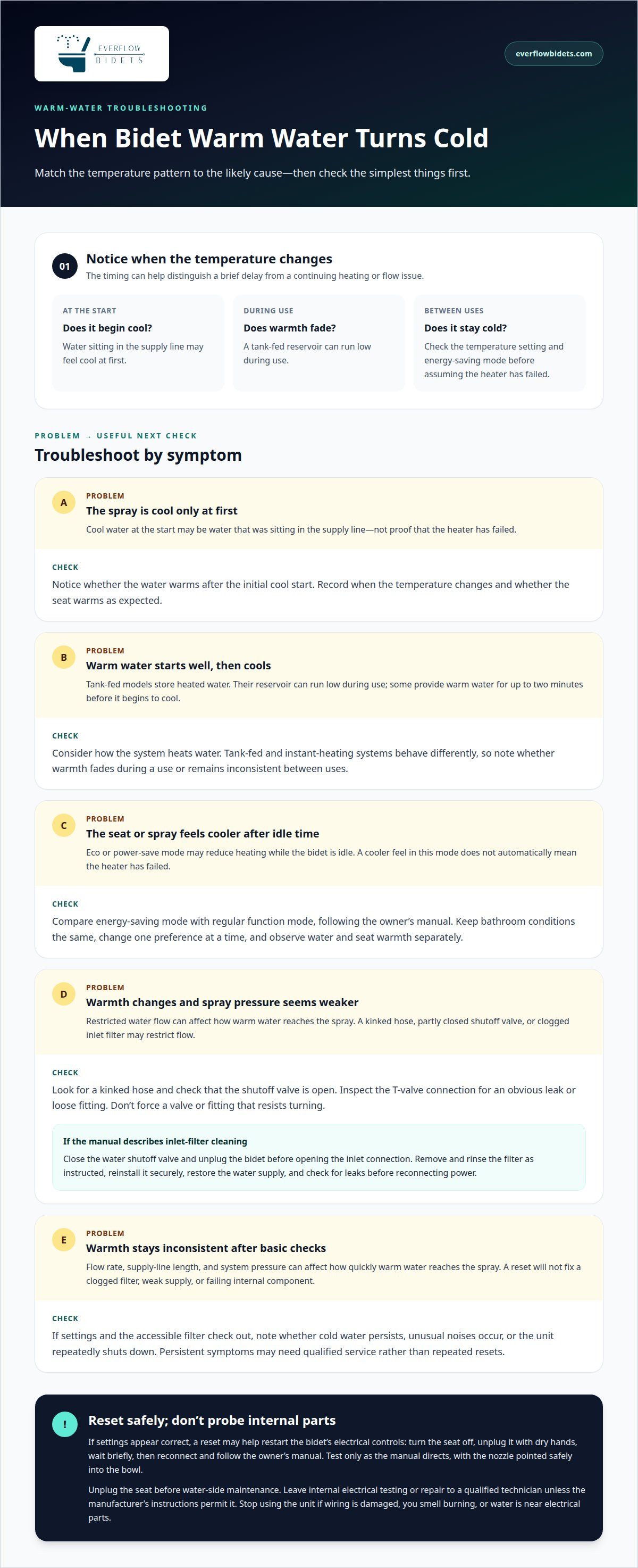
Intermittent warmth can stem from the bidet’s settings, restricted water flow, or the way its heater supplies water. Note when the temperature changes, then check the simplest causes before considering internal repairs.
Diagnosing Intermittent Warm Water
Intermittent warm water means the spray temperature changes during or between uses. The timing can help distinguish a setting or flow issue from a heater problem. Record whether the water starts warm, cools during use, or stays cold after the seat has rested. Also note whether the seat warms and whether spray pressure changes. These patterns help narrow down what to inspect.
First, check the temperature setting and confirm the seat isn’t in power-save mode. Switch to function mode if needed. Next, inspect the water supply: a kinked hose, partly closed shutoff valve, or clogged inlet filter can restrict flow. Most bidets connect through a T-valve at the toilet tank, so check that connection for an obvious leak or loose fitting. Don’t force a valve or fitting that resists turning.
Resetting the Water Heater
Resetting the heater means restarting the bidet’s electrical controls so they can resume normal operation. It may help when the settings appear correct but warmth remains inconsistent. Turn the seat off using its controls, then unplug it with dry hands. Wait briefly before reconnecting power and turning it back on. Follow the reset instructions in the owner’s manual, since controls differ by model.
After restarting, select a regular operating mode and a moderate water-temperature setting. Test the spray as directed by the manual, keeping the nozzle pointed safely into the bowl. If warmth returns and then fades again, note when it happens. Repeated resets won’t fix a clogged filter, weak supply, or failing internal component.
How to clean a bidet inlet filter: Close the water shutoff valve and unplug the bidet before opening the inlet connection. Follow the manual to remove the filter, rinse away debris with water, and reinstall it securely. Restore the water supply and check for leaks before reconnecting power.
Repair cost versus replacement cost: There’s no single repair-versus-replacement cost. The decision depends on the failed part, labor, the seat’s age, and the replacement model. Compare a repair estimate with the value and condition of your existing seat before deciding.
Testing the Heating Element and Sensor
The heating element warms the water, while a temperature sensor monitors its heat. Testing these parts can help identify an internal fault, but inaccurate diagnosis can lead to unnecessary repairs. Start with the display, settings, and manual-approved checks. Don’t open the seat to probe electrical components unless you’re qualified and the manufacturer’s instructions permit it.
Is DIY troubleshooting safe? Basic checks, such as changing settings or cleaning an accessible filter, are appropriate when the manual describes them. Unplug the seat before water-side maintenance, and leave internal electrical testing or repair to a qualified technician. Stop using the unit if you notice damaged wiring, a burning smell, or water near electrical parts.
If warmth remains intermittent after checking the settings and filter, restricted flow or system pressure may be involved. Flow rate and supply-line length affect how quickly warm water reaches the spray. An inline instant water heater or a recirculating pump may address delayed warmth, depending on the setup. Persistent cold water, unusual noises, or repeated shutdowns suggest a problem that basic resetting won’t resolve.
Turning off Eco Mode
Eco Mode is an energy-saving setting that can change how a bidet manages heating while idle. Its exact behavior depends on the seat’s design, so models may handle water and seat warmth differently. A cool seat or spray in Eco Mode doesn’t automatically mean the heater has failed.
Think of Eco Mode as a comfort-versus-energy preference, not a repair setting. A seat may reduce heating between uses, while function mode prioritizes normal operation. The difference matters if the bidet warms differently after you change modes. Use the manufacturer’s manual to understand the indicators, controls, and mode behavior for your model.
To see whether Eco Mode affects comfort, compare the bidet’s behavior in its energy-saving and regular operating modes. Keep the seat in the same bathroom conditions and avoid changing several preferences at once. Observe water and seat warmth separately. This comparison is more useful than relying only on a symbol or indicator, which may show that Eco Mode is active without explaining its effect.
Watch for a consistent pattern during ordinary use. For example, if the seat feels cooler after a period without use but behaves differently in function mode, the energy-saving setting may be part of the experience. If switching modes makes no noticeable difference, Eco Mode is less likely to explain the symptom. That observation helps focus troubleshooting without assuming a particular component has failed.
Some controls show Eco Mode through a light, display icon, or remote setting. Check the manual to understand the indicator before interpreting it. Depending on the model, a blinking symbol may mean something different from a steady light. Don’t rely on the control layout of another bidet, even if the remote looks similar.
Choose the mode that suits your routine. A household with frequent use may prefer consistent readiness, while someone who prioritizes reduced energy use may keep Eco Mode enabled. There’s no single setting for every home. The key question is whether the seat delivers the comfort you expect in the selected mode.
If you prefer warmer water and seat operation, select function mode according to the model’s instructions. If comfort doesn’t change, consider the other causes covered in this guide rather than repeatedly switching settings. Eco Mode is one variable, not a universal explanation for cold water. Comparing modes gives you a practical basis for deciding what to investigate next.
Why bidet water may feel cold
Bidet heating designs affect how temperature behaves during a wash. A tank-fed model stores heated water in a small reservoir, which refills after each use. An instant-heating model warms water as it passes through the device. Knowing which design you have helps explain why warmth may change during repeated uses or with different spray settings.
Instant heating doesn’t mean every setting produces the same temperature. Flow rate affects how water passes through the heating system, while supply-line length and system pressure affect delivery. A stronger spray may therefore feel different from a gentler one, even when the selected temperature hasn’t changed. Compare spray settings under the same conditions to see whether temperature shifts with flow.
Connections can also affect warm-water delivery. A plumber responding to this question said higher-pressure cold mains water can push lower-pressure hot water back in the bidet connection. If the bidet uses a warm-water connection, that pressure relationship may matter. A temperature change after water-supply work or a connection adjustment is a useful clue to record.
How long does a tankless bidet take to heat water? An instant-heating bidet warms water as it travels through the device, rather than waiting for stored water to heat. There isn’t one fixed wait time for every installation; flow rate, supply-line length, and system pressure affect delivery.
Can low water pressure prevent a bidet from heating water? Low pressure can affect water flow and how quickly warm water reaches the spray. It doesn’t, by itself, show that the heating element has failed. Note whether temperature changes alongside spray strength to help distinguish a delivery issue from a heater issue.
A useful comparison is whether temperature changes with the spray setting or stays cold across settings. If a tank-fed model behaves differently between uses, its reservoir’s refill cycle may be relevant. If an instant-heating model changes temperature with flow, consider its heating method and incoming supply. These patterns help explain the symptom without assuming every bidet works alike.
When should I replace a bidet seat that no longer heats water? Consider replacement after assessing the settings and water delivery, and when a repair diagnosis identifies a failed internal component. The decision depends on the seat’s condition, repair needs, and whether its features still suit your routine. A persistent temperature problem alone doesn’t establish that replacement is necessary.
At startup, bidet water is usually at room temperature for the first few seconds as water already in the line moves to the spray. That brief condition may explain why the first part of a wash doesn’t match the selected warmth, but doesn’t by itself show that the heater has stopped working.
After the water already in the line reaches the spray, bidet water may get colder after a few seconds. Notice when the change occurs and whether it follows the same pattern across uses. This timing, along with spray strength and supply conditions, helps distinguish a brief startup change from a continuing temperature problem.
How to troubleshoot a bidet seat with no warm water
Once you’ve checked basic controls and water delivery, focus on the pattern of the failure. A bidet that warms the seat but never the spray points to a different function than one where both stay cold. Separate observations help narrow down the problem without opening the seat or repeating earlier checks.
Use a simple comparison during normal operation:
- If the seat warms but the spray stays cold, record that the issue affects water heating only.
- If the spray warms but the seat stays cold, note that seat heating works differently from water heating.
- If neither warms, record whether the display or remote still responds.
- If warmth stops during use, note whether it happens at the same point each time.
Check the display for an error symbol or message, then consult the model’s manual to understand it. Write down the exact wording or symbol rather than relying on memory. A message tied to a specific function can give a technician more useful information than a general report that the bidet feels cold.
Consider when the problem began. A sudden change after a power interruption, cleaning, or moving the seat differs from a gradual loss of heating. Note any recent event and whether the seat has been moved or disconnected. Don’t remove covers to inspect internal parts, since the heating system and electrical controls are inside the unit.
Test the same function under consistent conditions, following the manual’s operating instructions. For example, use the same wash setting and observe whether the spray is cold from the start or changes during the cycle. Avoid changing several wash preferences at once. A repeatable symptom is easier to diagnose than a result produced by different settings each time.
Keep a short record of the model name, displayed message, which functions still work, and when the failure occurs. Include whether the issue affects the water, the seat, or both. If you’ve reset the unit according to the manual, note that too. This gives a service professional a clear starting point without requiring you to test internal wiring or dismantle the seat.
Stop using the bidet if the cord or housing appears damaged, or if you notice an unusual smell or sound. Don’t continue testing a unit with visible damage. If the seat remains cold despite normal controls and operation, follow the manufacturer’s troubleshooting guidance for that model and arrange a qualified diagnosis of its internal heating system.
How to reset a bidet toilet seat water heater
A reset restarts the bidet seat’s controls and heating functions without opening its housing. It may help after a temporary control issue, but won’t fix a clogged inlet or failed component. Reset procedures differ by model, so use the owner’s manual rather than assuming every seat has the same button sequence.
Before resetting, note the current water-temperature setting and any display lights or error messages. This helps you tell whether the reset changed anything. If the seat has a dedicated reset instruction, follow it exactly. If the manual directs you to restart power, use the steps below.
- Stop using the spray and switch the bidet seat off using its controls.
- Unplug the seat with dry hands, without pulling the cord itself.
- Wait for the interval given in the manual, if one is specified.
- Reconnect the plug securely and turn the seat back on.
- Restore the desired water-temperature setting and test the spray as directed.
Keep the nozzle aimed into the toilet bowl during a test. Observe whether the display returns to normal and whether the spray warms. A seat that responds to its remote but still delivers cold water may have a different problem from one with no power or control response. Note which functions work instead of immediately repeating the reset.
Some seats have a reset control on the remote or side panel. Other models use a power restart described in their documentation. Don’t press an unfamiliar button combination or hold controls longer than the manual directs. A reset sequence intended for another model may change settings or fail to restart the heater correctly.
A reset won’t correct a low temperature selection or active energy-saving mode. After restarting, confirm the water setting and operating mode. If the seat is in power-save mode, switch to function mode for a test. Keep other settings unchanged so you can tell whether the restart or a control adjustment affected the result.
Don’t remove the seat cover or open the electrical housing to reset the heater. Internal components combine electrical controls with water pathways, and an exterior reset doesn’t require access to them. Stop if the cord is damaged, the outlet area is wet, or you notice a burning smell. Avoid further testing in these conditions.
If the water remains cold after the reset described in the manual, check the supply flow and accessible inlet filter according to its instructions. If settings and water delivery appear normal, a professional may need to diagnose the heating element or temperature sensor. Share the model name, displayed error, reset method, and which functions still work. This information helps distinguish a control issue from an internal fault.
EverFlow Bidets
EverFlow Bidets helps you explore bidet options if troubleshooting points to replacement or a different setup. Compare bidet toilet seats, bidet toilets, and bidet toilet combinations with your bathroom needs and preferred features in mind. The right choice depends on whether you’re updating an existing toilet or considering an integrated unit, not just on the heating issue.
If your current seat still won’t provide warm water after basic checks, use EverFlow Bidets’ product information and learning resources to make an informed next decision. For guidance on your options, contact EverFlow Bidets.
Choose the comfort you want next
A persistent warm-water issue can clarify what matters most in your bathroom. Think beyond the immediate repair: consider how you want the controls to feel, what level of comfort suits your routine, and whether your current setup still fits your household. Those priorities can guide a practical choice rather than letting one malfunction decide for you.
If your bidet warm water is not working after the appropriate checks, use what you’ve observed to explain the problem and identify what you want from a future setup. A clear sense of your preferences makes the next decision more purposeful, whether you keep your current fixture or consider a change.
For help thinking through your options, reach out to EverFlow Bidets. A more comfortable daily routine starts with a choice that fits your needs.
Frequently Asked Questions
Typically, Why Is Bidet Water Cold?
Bidet water often feels cold because the spray begins with water that hasn’t warmed yet, or because the selected temperature isn’t being maintained. The experience can differ between uses: a tank-fed unit may start warm after its reservoir reheats, while an instant-heating model depends on water flowing through its heater. Compare the spray’s temperature at the start and later in the same use to identify the pattern.
Why is my bidet warm water not working?
A low temperature setting or active energy-saving mode can keep the water from feeling warm. If those controls are correct, consider restricted flow or an internal heating issue. Note whether the seat itself warms, whether spray pressure seems weaker than usual, and whether the water ever becomes warm. These observations help distinguish a control problem from a supply or component issue without opening the unit.
Disclaimer
The information provided in the EverFlowBidets blog is for general informational and educational purposes only. While we strive to publish accurate, current, and well-researched content, nothing on this website should be considered medical advice, diagnosis, or treatment. Articles discussing the potential health, hygiene, accessibility, or environmental benefits of bidet use are based on publicly available research, manufacturer information, and other reputable sources. Individual results may vary, and any health-related decisions should be made in consultation with a qualified healthcare professional.